Table of Contents
TogglePool maintenance keeps your swimming pool clean, safe, and ready for use. Without regular care, pools develop algae, bacteria, and chemical imbalances that can harm swimmers and damage equipment. This guide covers everything pool owners need to know about pool maintenance, from basic tasks to common mistakes. Whether you own an in-ground pool or an above-ground setup, proper maintenance protects your investment and ensures crystal-clear water all season long.
Key Takeaways
- Pool maintenance involves three core areas: water chemistry, physical cleaning, and equipment care to keep your pool safe and functional.
- Test your pool water 2–3 times per week and maintain pH levels between 7.2 and 7.6 for optimal chlorine effectiveness.
- Run your pool pump for 8–12 hours daily to ensure proper water circulation and filtration.
- Skim, brush, and vacuum your pool weekly to prevent algae growth and debris buildup.
- Shock your pool at dusk or nighttime every 1–2 weeks, as sunlight rapidly breaks down chlorine.
- Avoid common pool maintenance mistakes like neglecting pH levels, running the pump too little, or using household cleaning products.
Understanding the Basics of Pool Maintenance
Pool maintenance refers to the regular care and upkeep required to keep a swimming pool in optimal condition. It involves three main areas: water chemistry, physical cleaning, and equipment care.
Water chemistry is the foundation of pool maintenance. Pool water needs the right balance of chemicals to stay sanitary and prevent corrosion or scaling. The key measurements include pH levels (ideally between 7.2 and 7.6), chlorine or sanitizer levels, and total alkalinity.
Physical cleaning removes debris, dirt, and algae from the pool’s surfaces and water. This includes skimming the surface, brushing walls, and vacuuming the floor. A dirty pool isn’t just unappealing, it creates an environment where bacteria and algae thrive.
Equipment care ensures your pump, filter, and heater work efficiently. A malfunctioning pump can’t circulate water properly, and a clogged filter won’t remove contaminants. Regular inspections catch small problems before they become expensive repairs.
Pool maintenance also depends on the type of pool you own. Saltwater pools require different chemical management than traditional chlorine pools. Vinyl-lined pools need gentler cleaning methods than concrete or fiberglass surfaces. Understanding your specific pool type helps you apply the right maintenance approach.
Essential Pool Maintenance Tasks
Effective pool maintenance involves several core tasks that work together to keep water clean and equipment running smoothly.
Water Testing and Chemical Balancing
Testing pool water is the most important part of pool maintenance. Pool owners should test their water at least two to three times per week during swimming season.
Here’s what to monitor:
- pH levels: Should stay between 7.2 and 7.6. Low pH causes eye irritation and corrodes equipment. High pH reduces chlorine effectiveness and causes cloudy water.
- Chlorine levels: Maintain between 1 and 3 parts per million (ppm) to kill bacteria and algae.
- Total alkalinity: Keep between 80 and 120 ppm. Alkalinity acts as a buffer for pH levels.
- Calcium hardness: Should range from 200 to 400 ppm to prevent scaling or surface damage.
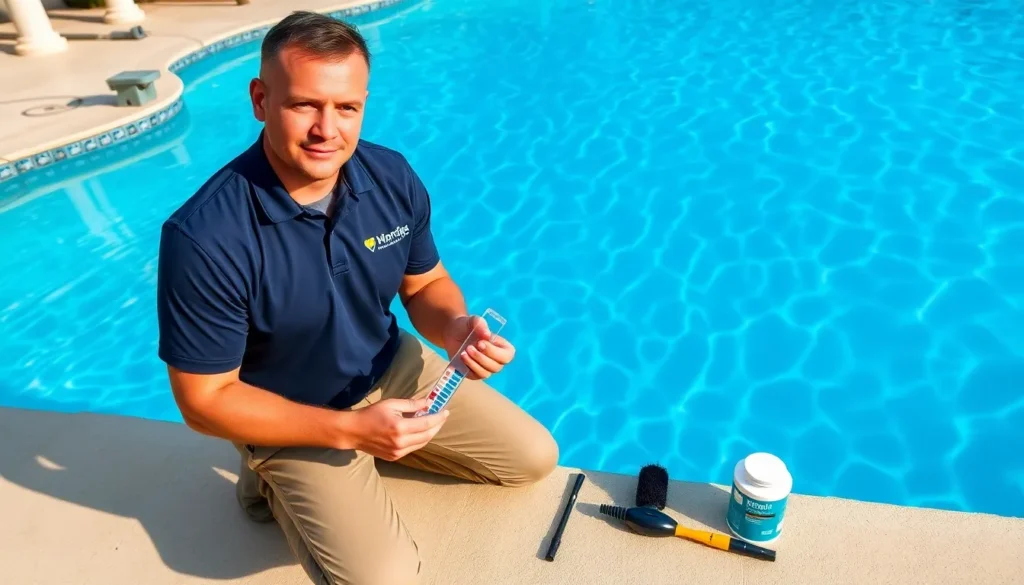
Test strips and liquid test kits provide quick readings at home. Many pool supply stores also offer free professional water testing for more detailed analysis.
When chemicals are out of balance, add the appropriate products gradually. Shocking the pool, adding a large dose of chlorine, eliminates bacteria and algae buildup. Most pools need shocking every one to two weeks, or after heavy use.
Skimming, Brushing, and Vacuuming
Physical cleaning is the visible side of pool maintenance. These tasks remove debris before it sinks and creates bigger problems.
Skimming uses a net to remove leaves, bugs, and floating debris from the water’s surface. Skim daily during fall or when trees are shedding. Even a few minutes of skimming prevents organic matter from decomposing in the water.
Brushing removes algae and dirt from pool walls, steps, and corners. Use a brush suited to your pool surface, stiff bristles for concrete, softer nylon for vinyl or fiberglass. Focus on areas with poor circulation, like behind ladders and in corners. Brush at least once per week.
Vacuuming cleans the pool floor. Manual vacuums connect to the skimmer and require hands-on operation. Automatic pool cleaners handle vacuuming independently, saving time for busy pool owners. Vacuum weekly or as needed based on debris levels.
How Often Should You Maintain Your Pool
Pool maintenance follows different schedules depending on the task. Here’s a practical breakdown:
Daily tasks:
- Run the pool pump for 8 to 12 hours
- Skim surface debris
- Check water level (should reach the middle of the skimmer opening)
Weekly tasks:
- Test and adjust water chemistry
- Brush walls and tile line
- Vacuum the pool floor
- Clean skimmer and pump baskets
- Inspect equipment for unusual sounds or leaks
Monthly tasks:
- Clean or backwash the filter
- Check for calcium buildup on tiles
- Inspect pool lights and accessories
Seasonal tasks:
- Open the pool in spring with a thorough cleaning and chemical treatment
- Close the pool properly in fall (if applicable) with winterizing chemicals and a cover
- Schedule professional equipment inspections annually
Pool maintenance demands increase during heavy use periods. After pool parties or storms, test water chemistry and shock the pool. Hot weather also affects chemical balance, chlorine breaks down faster in direct sunlight and high temperatures.
Consistency matters more than perfection. A pool that receives regular maintenance stays cleaner with less effort than one that gets sporadic attention.
Common Pool Maintenance Mistakes to Avoid
Even experienced pool owners make mistakes that compromise water quality or damage equipment. Here are the most common errors:
Ignoring pH levels: Many people focus only on chlorine while neglecting pH. But chlorine loses up to 90% of its effectiveness when pH rises above 8.0. Always balance pH before adding other chemicals.
Adding chemicals directly to the pool: Pouring granular chemicals straight into the water can bleach vinyl liners or stain surfaces. Pre-dissolve chemicals in a bucket of water first, then distribute the solution around the pool’s perimeter.
Running the pump too little: Some owners try to save electricity by running their pump only a few hours daily. This leads to poor circulation and stagnant water. Most pools need 8 to 12 hours of pump operation to filter all the water at least once.
Neglecting the filter: A dirty filter can’t clean the water effectively. Cartridge filters need cleaning every two to four weeks. Sand and DE filters require backwashing when pressure rises 8 to 10 psi above normal.
Shocking during the day: Sunlight destroys chlorine rapidly. Shock your pool at dusk or night to give the chemicals time to work before UV rays break them down.
Waiting too long between cleanings: Algae can take over a pool in just 24 to 48 hours under the right conditions. Skipping weekly pool maintenance tasks creates a snowball effect where problems compound quickly.
Using household cleaning products: Dish soap, bleach alternatives, or other household cleaners don’t belong in pools. They create foam, affect water chemistry unpredictably, and can damage equipment.