Table of Contents
ToggleA proper pool maintenance guide can mean the difference between a sparkling backyard oasis and a murky green headache. Pool owners who skip regular upkeep often face costly repairs, algae blooms, and water that’s unsafe for swimming. The good news? Keeping a pool in top shape doesn’t require a chemistry degree or hours of daily work.
This pool maintenance guide covers the core tasks every pool owner needs to master. From balancing water chemistry to cleaning schedules, equipment checks, and seasonal adjustments, these fundamentals will keep water crystal-clear year-round. Whether someone just installed their first pool or wants to improve their current routine, the following sections break down exactly what needs to happen and when.
Key Takeaways
- Test pool water at least twice weekly and keep pH between 7.2–7.6 with chlorine levels at 1–3 ppm for safe, clear water.
- Follow a consistent pool maintenance guide schedule: skim daily, brush and vacuum weekly, and shock monthly to prevent algae and debris buildup.
- Run your pool pump 8–12 hours daily during swimming season and inspect equipment regularly to avoid costly mid-season breakdowns.
- Adjust your maintenance routine seasonally—increase testing during summer’s heavy use and properly winterize to prevent freeze damage.
- Always add chemicals in small doses, one at a time, and allow circulation before retesting to avoid overcorrection.
Understanding Pool Water Chemistry
Water chemistry sits at the heart of any pool maintenance guide. Get it wrong, and swimmers face skin irritation, cloudy water, or worse, bacteria growth. Get it right, and the pool stays safe and inviting with minimal effort.
Key Chemical Levels to Monitor
pH Level: This measures how acidic or basic the water is. Pool water should stay between 7.2 and 7.6. Low pH corrodes equipment and irritates eyes. High pH reduces chlorine effectiveness and causes scale buildup.
Chlorine: The primary sanitizer for most pools. Free chlorine levels should remain between 1-3 ppm (parts per million). This kills bacteria, algae, and other contaminants that enter the water.
Total Alkalinity: Think of this as pH’s bodyguard. Alkalinity between 80-120 ppm helps prevent wild pH swings. Test and adjust alkalinity before tackling pH issues.
Calcium Hardness: Water that’s too soft attacks pool surfaces and equipment. Too hard, and calcium deposits form everywhere. Aim for 200-400 ppm depending on the pool type.
Testing Frequency
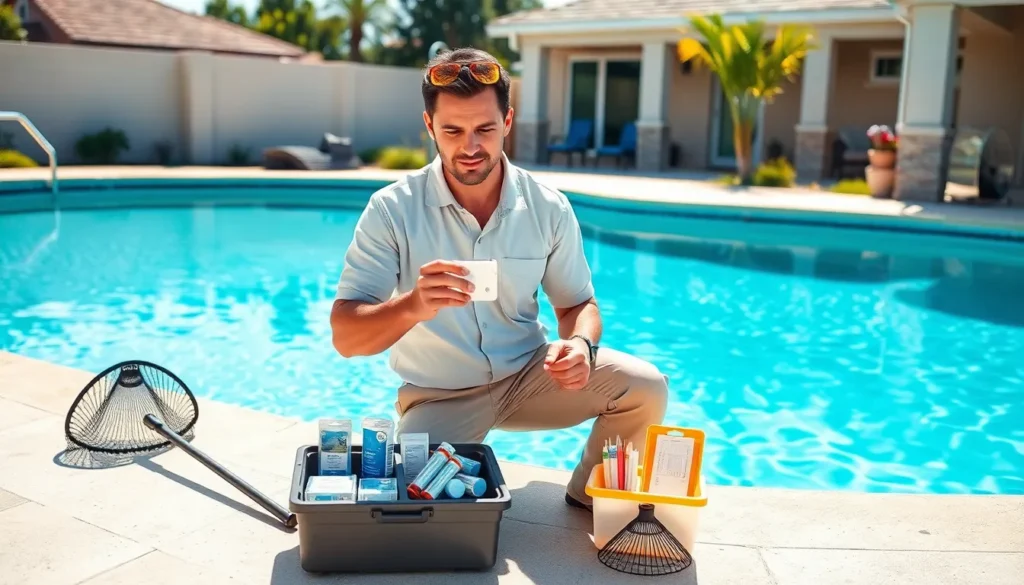
Pool owners should test water at least twice per week during swimming season. Test strips work fine for quick checks, but a liquid test kit provides more accurate readings. Many pool supply stores also offer free water testing, a smart move every few weeks to verify home results.
Adjusting chemicals works best in small doses. Add one chemical at a time, let it circulate for a few hours, then retest before making additional changes.
Essential Cleaning Tasks and Schedule
Even perfectly balanced water won’t stay clean without physical removal of debris and contaminants. A solid pool maintenance guide includes both daily quick tasks and weekly deep cleaning.
Daily Tasks (5-10 Minutes)
- Skim the surface: Remove leaves, bugs, and floating debris before they sink and decompose. A telescoping skimmer net makes this quick work.
- Check the skimmer basket: Empty it when half full. A clogged basket forces the pump to work harder.
- Visual inspection: Glance at the water clarity and color. Catching problems early prevents bigger issues.
Weekly Tasks (1-2 Hours)
- Brush the walls and floor: Algae spores settle on surfaces before becoming visible blooms. Brushing disrupts this process. Use a nylon brush for vinyl and fiberglass, stainless steel for concrete.
- Vacuum the pool: Manual vacuuming catches debris that settles on the bottom. Automatic cleaners handle this task between manual sessions.
- Clean the pump strainer basket: This secondary filter catches debris that passes the skimmer.
- Backwash or clean the filter: Sand and DE filters need backwashing when pressure rises 8-10 psi above normal. Cartridge filters require removal and hosing off.
Monthly Tasks
- Shock the pool: Super-chlorination breaks down combined chlorine (chloramines) that cause that “chlorine smell” and eye irritation. Shock after heavy use, rainstorms, or when combined chlorine exceeds 0.5 ppm.
- Check water level: Evaporation and splash-out lower water levels. Maintain water at the middle of the skimmer opening for proper circulation.
Equipment Care and Inspection
Pool equipment represents a significant investment. Regular inspection and maintenance extend equipment life and prevent mid-season breakdowns. Any thorough pool maintenance guide must address the mechanical side of pool care.
The Pump
The pump circulates water through the filter and back to the pool. Run it 8-12 hours daily during swimming season. Listen for unusual sounds, grinding or screeching indicates bearing problems. Check for air leaks at the pump lid and incoming lines. A pump pulling air loses efficiency and can burn out the motor.
Inspect the pump basket weekly and clear any debris. Prime the pump if it loses suction.
The Filter System
Filters come in three types: sand, cartridge, and diatomaceous earth (DE). Each requires different maintenance:
- Sand filters: Backwash when pressure rises 8-10 psi. Replace sand every 5-7 years.
- Cartridge filters: Hose off monthly, deep clean with filter cleaner quarterly, replace cartridges every 1-3 years.
- DE filters: Backwash as needed, add fresh DE after each backwash, disassemble and clean grids annually.
Heaters and Salt Systems
Pool heaters should receive professional inspection annually. Check for rust, debris in the burner area, and proper venting.
Salt chlorine generators need cell inspection every three months. Calcium buildup on the cell plates reduces output. Clean with a mild acid solution when deposits appear.
Seasonal Maintenance Considerations
Pool maintenance guide requirements shift with the seasons. Climate and usage patterns determine what each pool needs throughout the year.
Spring Opening
Opening a pool after winter involves several steps:
- Remove the cover and clean it before storage
- Reinstall ladders, rails, and other removed equipment
- Fill to proper water level
- Start the pump and check for leaks
- Run the filter continuously for 24-48 hours
- Test and balance all chemical levels
- Shock the pool heavily to kill any organisms that survived winter
Expect the balancing process to take several days. Patience prevents overcorrection.
Summer Peak Season
Heavy use means more frequent maintenance. Test water every other day during peak swimming periods. Increase shock treatments after pool parties or when multiple swimmers use the pool daily.
Hot weather accelerates chlorine loss. Consider stabilized chlorine products or add cyanuric acid (30-50 ppm) to protect chlorine from UV breakdown.
Fall Preparation
As temperatures drop:
- Reduce pump run time as usage decreases
- Remove leaves promptly, decomposing organic matter depletes chlorine fast
- Clean the filter thoroughly before closing
- Lower the water level below the skimmer
Winter Closing
Proper winterization prevents freeze damage:
- Balance water chemistry one final time
- Blow out plumbing lines and plug returns
- Add winterizing chemicals per manufacturer instructions
- Install a quality winter cover
- Remove the pump and store indoors in freezing climates