Table of Contents
ToggleA dishwasher that cleans dishes but can’t clean itself is like a vacuum that only spreads dirt around. Over time, grease, limescale, and detergent residue build up inside the machine, on the spray arms, heating element, and hidden corners you never see. Finish Dishwasher Cleaner is formulated specifically to tackle these deposits, breaking down buildup that regular wash cycles leave behind. Using it isn’t complicated, but doing it right makes the difference between a quick rinse and a genuinely deep clean. This guide walks through the exact process, timing, and maintenance tips to keep the machine running efficiently and dishes coming out spotless.
Key Takeaways
- Regular Finish dishwasher cleaning removes grease, limescale, and detergent buildup that standard wash cycles cannot reach, improving spray arm function and heating element efficiency.
- To use Finish Dishwasher Cleaner, place the sealed bottle upside down in the bottom rack and run the hottest, longest cycle available without adding any additional detergent.
- Most households should clean their dishwasher with Finish once monthly, but those with hard water or daily usage should increase to every two to three weeks for optimal performance.
- Between deep cleans, maintain your dishwasher by scraping plates before loading, cleaning the filter weekly, leaving the door ajar after cycles, and checking spray arm nozzles quarterly.
- A clean dishwasher runs shorter cycles, produces spotless dishes with no musty odors, and extends the machine’s lifespan while reducing energy consumption.
Why Regular Dishwasher Cleaning Matters
Most people assume that because a dishwasher constantly runs water and detergent, it stays clean on its own. It doesn’t. Hard water minerals accumulate on the heating element and interior walls. Grease from plates settles in the filter and spray arm nozzles. Detergent residue clings to the door gasket and dispenser.
These deposits do more than look unpleasant. Clogged spray arms reduce water pressure, meaning dishes don’t get fully cleaned. Limescale on the heating element forces the machine to work harder, increasing energy consumption and shortening its lifespan. Bacteria and mold can grow in the moist, grimy environment, leading to musty odors that transfer to supposedly clean dishes.
Finish Dishwasher Cleaner uses a concentrated formula designed to dissolve grease and limescale throughout the entire machine, including areas standard detergent can’t reach. It’s a maintenance step, not a repair solution, if the dishwasher is already malfunctioning due to severe buildup, a cleaner won’t fix mechanical issues, but it will prevent many problems from developing in the first place.
Cleaning also improves wash performance. When spray arms aren’t clogged and the heating element isn’t coated in scale, water heats faster and circulates more effectively. That means shorter cycles, cleaner dishes, and less rewashing by hand, which defeats the purpose of owning a dishwasher.
What You’ll Need to Clean Your Dishwasher with Finish
This isn’t a complex job. The product does most of the work, but a few basic items make the process smoother.
Materials:
- Finish Dishwasher Cleaner (liquid formula, typically sold in a 250 mL bottle with an inverted design)
- Clean, dry cloth or paper towel
- Optional: white vinegar or baking soda for pre-treating heavy buildup
Tools:
- None required, the cleaner bottle is designed to sit upside down in the bottom rack during the cycle
Safety Notes:
- While the cleaner is formulated for dishwashers, avoid direct skin contact. If it gets on hands, rinse thoroughly.
- Don’t mix with other cleaning agents. Using vinegar or baking soda as a pre-treatment is fine, but run a rinse cycle before using the Finish product.
- Keep out of reach of children and pets.
The beauty of this product is simplicity, no scrubbing, no dismantling parts, no overnight soaking. The bottle itself acts as the delivery system.
Step-by-Step Guide to Using Finish Dishwasher Cleaner
Preparing Your Dishwasher
Start with an empty dishwasher. Remove all dishes, utensils, and racks if they’re easy to pull out, though most models allow you to leave the racks in place. Check the bottom of the tub for any large food particles, broken glass, or debris. The cleaner works on grease and mineral deposits, not chunks of last week’s lasagna.
Remove the filter at the bottom of the machine. Most filters twist or lift out. Rinse it under hot water and use a soft brush to clear any trapped gunk. If the filter is especially grimy, soak it in warm water with a drop of dish soap for 10 minutes, then scrub and rinse. Reinstall the filter securely.
Inspect the spray arms. Spin them by hand to make sure they rotate freely. If nozzles are clogged, use a toothpick or wire to clear the holes. Don’t skip this, clogged spray arms mean the cleaner won’t circulate properly, and the whole exercise becomes less effective.
Wipe down the door gasket with a damp cloth. This rubber seal traps food particles and moisture, creating a breeding ground for mold. A quick wipe removes surface grime before the deep clean.
Running the Cleaning Cycle
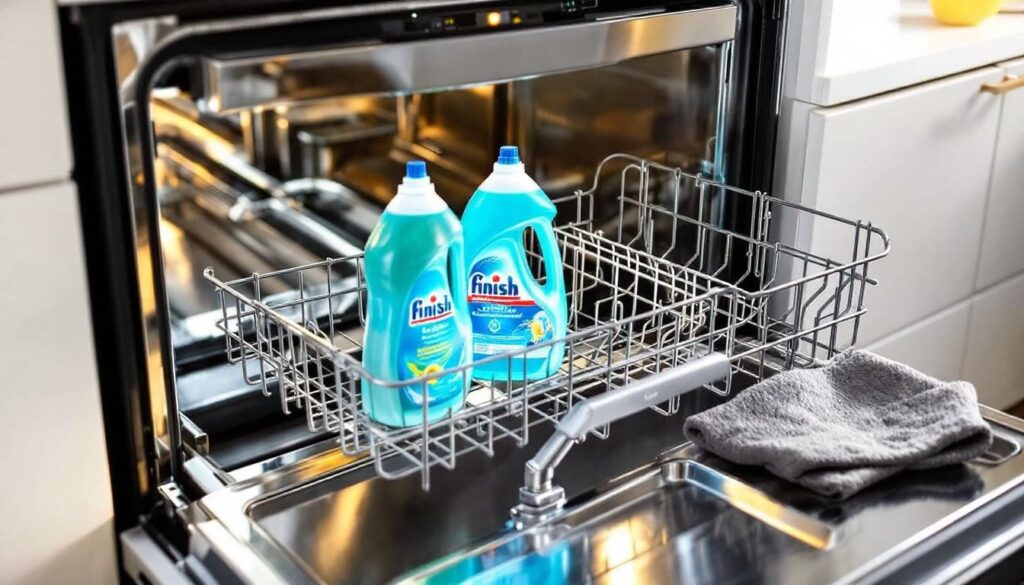
Take the Finish Dishwasher Cleaner bottle and remove any labels or wrapping that might interfere with the cleaning process. The bottle is designed to be placed upside down in the bottom rack. Don’t open the cap, leave it sealed. The heat and water pressure during the cycle will release the cleaner automatically.
Place the bottle upside down in the bottom rack, tucked between the tines. Make sure it’s stable and won’t tip over during the cycle. Some users wedge it into a corner for extra security.
Close the dishwasher door. Select the hottest, longest cycle available, usually labeled as heavy, pots and pans, or sanitize. The high temperature is critical. Limescale and grease break down faster in hot water, and the extended cycle time gives the cleaner more contact with all interior surfaces. Don’t add any detergent, rinse aid, or other products. The cleaner works alone.
Start the cycle and let it run completely. Don’t open the door midway through. The process typically takes 90 to 120 minutes, depending on the dishwasher model. During this time, the cleaner circulates through the spray arms, onto the heating element, and across the walls and door.
Once the cycle finishes, open the door and let the interior air out for a few minutes. Remove the empty bottle and discard it. Wipe down any visible moisture on the door and gasket. The interior should look noticeably cleaner, brighter stainless steel, clearer plastic, and no filmy residue on the walls.
Run a quick rinse cycle afterward if desired, though it’s not strictly necessary. The cleaner is formulated to rinse away completely, but a rinse cycle provides extra assurance, especially if the machine had heavy buildup.
How Often Should You Use Finish Dishwasher Cleaner?
Frequency depends on water hardness, how often the dishwasher runs, and what goes into it. For most households, once a month is the baseline. That keeps buildup from accumulating to the point where it affects performance.
If the home has hard water, common in areas with high mineral content, cleaning every two to three weeks makes more sense. Hard water leaves limescale deposits faster, and those deposits are harder to remove once they’ve set. Installing a water softener can reduce the frequency of deep cleaning, but it doesn’t eliminate the need entirely.
Households that run the dishwasher daily, especially with greasy cookware or baked-on food, benefit from more frequent cleaning. Grease and food particles accumulate in the filter and spray arms faster when the machine is in constant use. Cleaning every essential dishwasher maintenance tasks two weeks prevents clogs before they start.
On the other hand, if the dishwasher only runs a few times a week and the water is soft, stretching the interval to every six weeks is reasonable. Pay attention to performance. If dishes start coming out cloudy, the machine smells musty, or the cycle takes longer than usual, it’s time for a cleaning regardless of the schedule.
Some dishwashers have indicator lights or reminders for cleaning cycles. Follow those if the machine has them, but use them as a starting point, not a rigid rule. The manufacturer doesn’t know the local water quality or how much grease goes through the machine.
Tips for Maintaining a Clean Dishwasher Between Deep Cleans
Using Finish cleaner monthly is important, but a few simple habits between those deep cleans make a noticeable difference.
Scrape, don’t rinse. Modern dishwashers and detergents are designed to handle food residue, but large chunks clog the filter and spray arms. Scrape plates into the trash or compost before loading. Pre-rinsing is unnecessary and wastes water.
Run hot water before starting the cycle. Turn on the kitchen faucet and let it run until the water is hot, then start the dishwasher. This ensures the machine fills with hot water from the start, improving detergent performance and reducing buildup.
Clean the filter weekly. Pull it out, rinse under hot water, and give it a quick scrub with a brush. This takes less than two minutes and prevents most clogs. Using the right cleaning tools makes this task faster and more effective.
Leave the door ajar after cycles. Moisture trapped inside promotes mold and mildew. Cracking the door open for an hour after a cycle lets the interior dry out completely.
Wipe the door gasket monthly. This rubber seal traps food particles and moisture. A quick wipe with a damp cloth prevents mold from taking hold. For stubborn spots, use a bit of white vinegar on the cloth.
Use the right detergent and rinse aid. Cheap detergent leaves more residue, which builds up faster. Rinse aid reduces water spots on dishes and helps water drain off interior surfaces, reducing mineral deposits. Understanding the difference between cleaning, sanitizing, and disinfecting helps maintain a truly clean appliance.
Run full loads, not half-full ones. Running the dishwasher with only a few items wastes water and energy, but it also means food particles and grease aren’t diluted across a full load. They concentrate on a few surfaces, increasing buildup.
Check spray arms quarterly. Spin them by hand. If they don’t move freely or water doesn’t spray evenly, clear the nozzles with a toothpick. This prevents uneven cleaning and ensures the Finish cleaner circulates properly during deep cleans.
Skip the extra heat dry setting. Air drying is gentler on plastic components and reduces the chance of baked-on residue from detergent or minerals. It also saves energy. Many experts on home maintenance recommend air drying as a way to extend appliance life.
Run a vinegar rinse quarterly. Place a cup of white vinegar in a dishwasher-safe container on the top rack. Run a hot cycle. This breaks down light mineral deposits between deep cleans with Finish. Don’t do this the same day as using Finish, alternate the methods.
These habits don’t replace the monthly deep clean, but they extend the time between serious buildup and keep the dishwasher running smoothly. For households managing multiple cleaning routines, resources like Real Simple offer additional strategies for simplifying home maintenance tasks.