Table of Contents
TogglePool maintenance doesn’t have to be overwhelming. With the right knowledge and a consistent routine, any pool owner can keep their water crystal clear and safe for swimming.
This guide breaks down the essentials of pool maintenance into manageable steps. Beginners will learn about water chemistry, weekly cleaning tasks, equipment care, and seasonal adjustments. By the end, pool maintenance will feel like a simple part of the weekly routine rather than a dreaded chore.
Key Takeaways
- Test pool water at least twice weekly and maintain pH levels between 7.2 and 7.6 for safe, clear water.
- Weekly pool maintenance tasks—skimming, vacuuming, and brushing—take only 30 to 60 minutes and prevent costly repairs.
- Run your pool pump 8 to 12 hours daily during swimming season to ensure proper filtration and circulation.
- Clean skimmer baskets and pump strainer baskets weekly to protect your equipment and maintain water flow.
- Adjust your pool maintenance routine seasonally, increasing care in summer and winterizing properly in freezing climates.
Understanding Pool Chemistry Basics
Pool chemistry forms the foundation of proper pool maintenance. Without balanced water, pools can develop algae, bacteria, and scaling that damage both swimmers and equipment.
pH Levels
The pH scale measures how acidic or alkaline the water is. Pool water should stay between 7.2 and 7.6. Water that’s too acidic irritates eyes and skin. Water that’s too alkaline reduces chlorine effectiveness and causes cloudy conditions.
Chlorine
Chlorine kills bacteria and prevents algae growth. Free chlorine levels should remain between 1 and 3 parts per million (ppm). Pool owners can add chlorine through tablets, liquid, or a salt chlorine generator.
Total Alkalinity
Alkalinity acts as a buffer for pH levels. The ideal range falls between 80 and 120 ppm. When alkalinity drops too low, pH levels swing wildly. When it rises too high, the water becomes cloudy and scale forms on surfaces.
Calcium Hardness
Calcium hardness measures dissolved calcium in the water. Pools need between 200 and 400 ppm. Low calcium causes the water to pull minerals from pool surfaces, damaging plaster and vinyl. High calcium creates scale deposits on tiles and equipment.
Pool owners should test their water at least twice per week. Testing kits and strips are available at most pool supply stores. Many local pool stores also offer free water testing services.
Essential Weekly Maintenance Tasks
Consistent weekly pool maintenance prevents small problems from becoming expensive repairs. These tasks take about 30 to 60 minutes total and keep the pool in excellent condition.
Skimming And Vacuuming
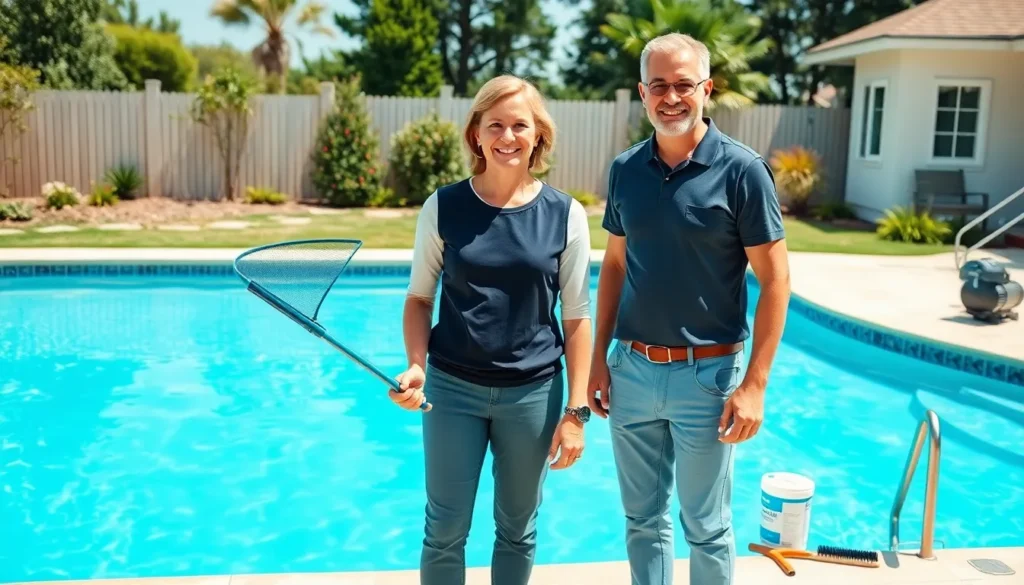
Skimming removes leaves, bugs, and debris from the water surface. Pool owners should skim daily during heavy use seasons and at least every other day otherwise. A long-handled skimmer net makes this task quick and easy.
Vacuuming cleans debris that sinks to the pool floor. Manual vacuums connect to the pool’s filtration system and require the owner to guide the vacuum head across the bottom. Automatic pool cleaners handle this task independently, though they cost more upfront.
The pool walls and waterline also need attention. A pool brush removes algae and buildup before it becomes visible. Brushing once per week keeps surfaces clean and prevents staining.
Checking And Balancing Water Levels
Water levels drop through evaporation and splash-out. The water should sit at the middle of the skimmer opening. Too low, and the pump runs dry and burns out. Too high, and the skimmer can’t remove surface debris effectively.
Pool maintenance includes adding water when levels drop. A garden hose works fine for small adjustments. After adding significant amounts of water, owners should retest and balance the chemistry.
Rain also affects pool maintenance. Heavy storms dilute chemicals and change pH levels. Pool owners should test their water after any major rainfall and adjust chemicals accordingly.
Weekly pool maintenance also means cleaning the skimmer basket and pump strainer basket. Clogged baskets reduce water flow and strain the pump motor.
Maintaining Your Pool Equipment
Pool equipment requires regular attention to function properly. Well-maintained equipment lasts longer and operates more efficiently.
The Pool Pump
The pump circulates water through the filtration system. It should run 8 to 12 hours daily during swimming season. Pool owners should check the pump for unusual noises, leaks, or reduced flow. The pump basket needs cleaning weekly to prevent clogs.
The Filter
Pool filters remove particles and contaminants from the water. Three types exist: sand, cartridge, and diatomaceous earth (DE). Each requires different pool maintenance.
Sand filters need backwashing when the pressure gauge reads 8 to 10 psi above normal. Cartridge filters require removal and hosing off every few weeks. DE filters need backwashing plus fresh DE powder added afterward.
All filters eventually need replacement. Sand lasts about 5 to 7 years. Cartridges last 1 to 2 years with proper care. DE grids last 7 to 10 years.
The Heater
Pool heaters require annual professional inspection. Between inspections, owners should keep the area around the heater clear of debris and check for proper operation. Gas heaters need ventilation checks for safety.
Automation Systems
Many pools use timers, chlorinators, and automatic chemical feeders. These systems need periodic calibration and cleaning. Salt chlorine generators require cell inspection and cleaning every few months to remove calcium buildup.
Seasonal Pool Care Tips
Pool maintenance changes with the seasons. Each time of year brings different challenges and requirements.
Spring Opening
Spring pool maintenance begins with removing the cover and cleaning off accumulated debris. The filter, pump, and heater all need inspection before starting. Pool owners should fill the pool to proper levels, run the pump, and shock the water with extra chlorine. Testing and balancing chemistry may take several days as the water clears.
Summer Care
Summer brings the heaviest pool use. Higher temperatures and more swimmers mean more frequent pool maintenance. Testing should happen every 2 to 3 days. Chlorine demand increases, and algae grows faster in warm conditions. Running the pump longer, up to 12 hours daily, helps maintain water clarity.
Fall Transition
As temperatures drop, pool maintenance becomes easier. Fewer swimmers mean lower chemical demand. But, falling leaves create extra skimming work. A leaf net cover prevents debris from entering the pool between uses.
Winter Closing
Winter pool maintenance depends on climate. In freezing areas, pools need winterization: lowering water levels, draining equipment, adding winterizing chemicals, and covering securely. In warmer climates, pools can run year-round with reduced maintenance schedules.
Proper seasonal pool maintenance extends equipment life and makes each opening easier. Skipping steps or cutting corners in fall leads to expensive problems in spring.