Table of Contents
ToggleSeattle’s notorious rainfall, averaging 37 inches annually, makes gutters one of the hardest-working components of any home. When they fail, water finds its way into foundations, soffits, and siding, causing thousands in damage. Yet most homeowners ignore their gutters until water’s already pooling where it shouldn’t. This guide walks through everything Seattle homeowners need to know about keeping gutters clear and functional, whether tackling the job themselves or knowing when to call in help. From timing cleanings around the Pacific Northwest’s weather patterns to recognizing warning signs before damage occurs, these strategies protect homes year-round.
Key Takeaways
- Seattle’s 37-inch annual rainfall and dense tree canopy make gutter cleaning essential to prevent foundation damage costing $3,000+, water infiltration, and structural rot.
- Schedule gutter cleaning in late spring (May-June), mid-to-late fall (October-November), and late winter (February-March) to align with Seattle’s unique seasonal debris patterns and weather cycles.
- DIY gutter cleaning requires proper safety equipment—a rated extension ladder, rubber gloves, safety glasses, and a helper—with most single-story homes taking 2-3 hours to complete thoroughly.
- Warning signs like water overflow, sagging gutters, siding stains, and foundation moisture demand immediate attention, as clogged gutters add 10+ pounds per linear foot of stress to hangers and fascia.
- Gutter guards reduce but don’t eliminate maintenance needs; combining guards with annual inspections, 6-10 foot branch trimming, and proper downspout extensions (6+ feet from foundation) prevents costly water damage.
Why Regular Gutter Cleaning Is Essential for Seattle Homes
Seattle’s combination of heavy rainfall and dense tree canopy creates a perfect storm for gutter problems. Fir needles, maple leaves, moss fragments, and alder catkins accumulate faster here than in drier climates, often forming dense mats that trap water instead of directing it away from the house.
When gutters clog, water overflows onto fascia boards, seeps behind siding, and saturates the soil around foundations. In Seattle’s clay-heavy soils, this creates hydrostatic pressure against basement walls, leading to cracks and seepage. Foundation repairs typically start at $3,000 and climb from there, far more than preventive gutter maintenance.
Clogged gutters also add significant weight to the system. A 5-inch K-style gutter filled with waterlogged debris can weigh over 10 pounds per linear foot, stressing hangers and potentially pulling the gutter away from the fascia. This is especially problematic on older homes where fascia boards may already be compromised by moisture.
Moss and algae growth accelerates on perpetually damp gutters, spreading to roof shingles and shortening their lifespan. The combination of standing water and organic material creates ideal conditions for wood rot in fascia and soffit boards, often requiring replacement of entire sections if left unchecked.
When to Schedule Gutter Cleaning in Seattle’s Climate
Seattle’s weather patterns demand different timing than the standard spring-and-fall approach recommended elsewhere. The region’s specific tree species and rainfall distribution create unique maintenance windows.
Late spring (May-June) is critical for removing the cottonwood seeds, fir pollen, and flower debris that accumulate during early growth season. This cleaning prepares gutters for summer’s occasional storms and prevents material from decomposing into sludge.
Mid-to-late fall (October-November) handles the heavy leaf drop from maples, birches, and alders. This timing catches most deciduous leaves before winter rains begin in earnest. Waiting until after the first hard frost ensures trees have dropped most of their foliage, but don’t delay past Thanksgiving, frozen debris is harder to remove and November storms can cause immediate problems.
Homes near evergreens need a third cleaning in late winter (February-March). Douglas fir and cedar drop needles year-round, and winter windstorms knock down significant amounts of debris. This cleaning also addresses moss growth that takes hold during Seattle’s prolonged wet season.
Properties with heavy tree coverage or multi-story roofs may need quarterly cleanings. Homes with seasonal maintenance schedules can prevent the majority of weather-related damage by staying ahead of debris accumulation rather than reacting to clogs.
DIY Gutter Cleaning: Tools, Safety, and Step-by-Step Process
Essential Safety Equipment and Preparation
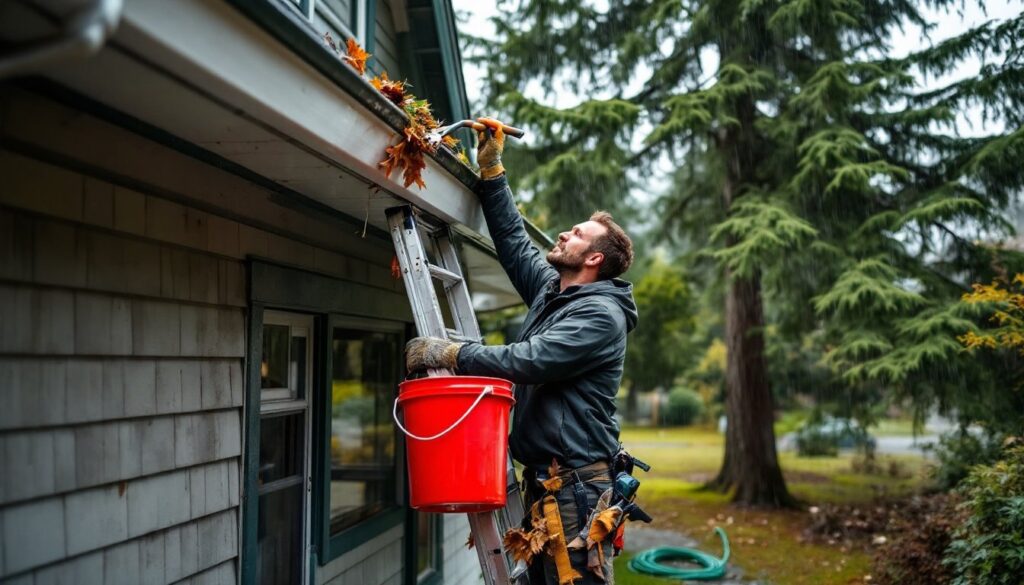
Gutter cleaning poses real risks, particularly on Seattle’s often-slick two-story homes. Never work from a ladder alone, have someone nearby who can steady the ladder and call for help if needed.
A stable extension ladder rated for 225-300 pounds (Type I or IA) is non-negotiable. Lean it at a 75-degree angle, for every 4 feet of height, the base should be 1 foot from the wall. Ladder stabilizers prevent the ladder from resting directly on gutters and provide standoff space for working.
Essential PPE includes:
- Rubber-palmed work gloves for grip on wet surfaces and protection from sharp debris
- Safety glasses to keep debris out of eyes when scooping overhead
- Rubber-soled boots with good tread for ladder stability
- Dust mask or respirator if gutters contain decomposed organic matter or mold
Gather materials before climbing:
- Gutter scoop or plastic garden trowel
- 5-gallon bucket with S-hook to hang from ladder
- Garden hose with spray nozzle
- Plumber’s snake for stubborn downspout clogs
- Drop cloth to catch debris below
Check the weather forecast. Don’t clean gutters during rain or when shingles are wet, slippery conditions multiply fall risk exponentially.
The Cleaning Process From Start to Finish
-
Start at the downspout. Remove the strainer if present and check for visible clogs. If water backs up in the gutter, the downspout likely needs clearing before removing debris from the trough.
-
Work away from the downspout in 3-4 foot sections. Scoop debris into the bucket rather than dropping it on the ground, it’s easier than raking sodden leaves from landscaping later. For homes in Seattle where professional gutter cleaning typically costs $1.26 to $1.56 per linear foot, many homeowners choose to DIY to save several hundred dollars.
-
Use a garden hose to flush remaining material toward downspouts. Start at the high end of each run. If water doesn’t drain quickly, there’s a downspout clog.
-
Clear downspout blockages by running water from the top while watching the bottom outlet. If water doesn’t flow freely, disconnect the downspout at the elbow and feed a plumber’s snake up from the bottom. Stubborn clogs sometimes require removing the downspout entirely, they’re typically held by 2-3 screws at each connection.
-
Inspect gutter slope while flushing. Water should flow toward downspouts without pooling. Standing water indicates sagging sections that need hanger adjustment. Gutters should slope 1/4 inch per 10 feet of run.
-
Check for damage as you work: loose hangers, separated seams, rust spots, or holes. Small holes can be patched with gutter sealant: larger repairs may need professional attention.
-
Reconnect and test. After everything’s clear, run water through the entire system and watch for leaks at seams, miters, and end caps.
A typical single-story 1,500-square-foot home takes 2-3 hours for a thorough DIY cleaning. Two-story homes or complex rooflines can easily double that time. If your home exceeds 24 feet in height or has steep roof pitches, strongly consider hiring a professional, the fall risk isn’t worth the savings.
Signs Your Gutters Need Immediate Attention
Don’t wait for scheduled maintenance if any of these warning signs appear. They indicate problems that will worsen quickly in Seattle’s wet climate.
Water spilling over gutter edges during rain means either a clog downstream or sagging gutters preventing proper flow. Check during the next rainfall, if water sheets over the sides rather than channeling to downspouts, investigate immediately.
Sagging or pulling away from the house indicates failed hangers or rotting fascia. Gutters should sit flush against fascia boards with no visible gaps. Use a level to check sections that look droopy, if they’ve lost their slope or are visibly bowed, the hanger spacing likely needs adjustment or the fascia needs repair.
Staining on siding below gutters points to chronic overflow. White or colored siding shows dark streaks: cedar siding develops black stains. This indicates water’s been running over gutter edges long enough to create biological growth patterns.
Plant growth in gutters means debris has been sitting long enough for seeds to germinate. Small grasses, moss, or even seedling trees indicate months of neglect. The root systems can actually damage gutter seams and create leaks.
Basement moisture or foundation cracks after heavy rain often trace back to gutter problems. If downspouts dump water within 5 feet of the foundation, or if gutters overflow directly onto the foundation zone, water infiltration becomes likely.
Peeling exterior paint below the roofline suggests water’s wicking behind siding, often from gutter overflow. Check the fascia and soffit boards for soft spots indicating rot, this requires immediate professional assessment as structural components may be compromised.
Ice dams in winter form when gutters trap water that freezes and backs up under shingles. While Seattle’s mild winters make this less common than in colder regions, it happens during periodic freezes. The combination of clogged gutters and frozen precipitation creates damaging conditions quickly.
Preventing Gutter Clogs: Maintenance Tips for Seattle Homeowners
Prevention reduces how often gutters need cleaning and extends the system’s lifespan. These strategies work specifically for Seattle’s challenging conditions.
Gutter guards reduce debris volume but don’t eliminate cleaning entirely. Mesh screens work well for leaves but fir needles can mat on top, requiring brushing off. Foam inserts clog with fine debris and decompose over time. Reverse-curve systems (where water flows around a hood into a slot) work best for leaves but cost $15-25 per linear foot installed. No system is maintenance-free, expect to clean guards annually and gutters every 2-3 years rather than twice yearly.
Trim overhanging branches to at least 6-10 feet from the roofline. This reduces direct debris drop and minimizes the moss spores, needles, and leaves that land on your roof and wash into gutters. For tall conifers, this may require a professional arborist with proper equipment.
Install downspout extensions to carry water at least 6 feet from the foundation. Flexible extensions work but can kink or develop clogs: solid PVC extensions last longer and maintain consistent slope. In areas with heavy clay soil, consider underground drainage pipes that discharge to daylight or connect to storm sewers where code permits.
Check hangers annually. Spikes and ferrules (the traditional tube-and-spike system) work loose over time. Hidden hangers that screw into fascia or rafters provide better long-term support. Spacing should be every 24 inches on runs exposed to snow and ice: 36 inches is adequate in areas that stay above freezing.
Apply gutter sealant to joints and end caps every 3-5 years. Seattle’s wet-dry cycles cause expansion and contraction that opens small leaks. Clean and dry the area thoroughly before applying, sealant won’t adhere to damp metal or over old, degraded material.
Flush gutters monthly during heavy debris seasons with a garden hose. This 10-minute task prevents material from compacting into the dense mats that require intensive scraping. It’s especially effective in spring when cottonwood fluff and pollen accumulate rapidly.
Consider a rain barrel or cistern at one downspout. This reduces water volume hitting the ground near foundations and provides irrigation water during Seattle’s dry summers. Check local codes, some jurisdictions regulate rainwater collection systems.
Regular maintenance beats emergency repairs. Replacing a rotted fascia board costs $6-12 per linear foot in materials alone, plus labor if hiring out. Foundation repairs start in the thousands. Spending a few hours twice a year on gutter maintenance protects the larger investment in the home’s structure and prevents the headaches that come with water damage.