Table of Contents
ToggleClogged drains don’t ask permission. They show up at the worst possible moment, usually when you’re elbow-deep in dishwater or minutes before guests arrive. Cincinnati homeowners face unique drainage challenges, from aging cast iron stacks in historic homes to tree roots hunting for moisture during our humid summers. Whether it’s a sluggish kitchen sink or a bathtub that won’t drain, knowing how to tackle clogs yourself, and when to call in backup, saves time, money, and a whole lot of frustration. This guide walks through the real-world drain problems locals deal with, proven DIY methods that actually work, and the signs that it’s time to hand the job over to a pro.
Key Takeaways
- Cincinnati’s aging cast iron and galvanized steel drain pipes, combined with tree root intrusion from mature trees, create unique drainage challenges that require prompt attention to prevent costly repairs.
- DIY drain cleaning methods like baking soda and vinegar work for minor clogs, while plungers and handheld snakes offer affordable solutions—but chemical cleaners should be avoided as they damage pipes and create safety hazards.
- Call a professional drain cleaning service immediately if you experience main sewer line backups, recurring clogs in the same drain, or clogs that return within days of DIY treatment, as these indicate deeper structural problems.
- Installing mesh drain screens, never pouring grease down drains, and running hot water after kitchen use prevent 90% of common clogs and reduce the need for emergency service calls.
- Know your home’s main sewer clean-out location and consider professional video inspection ($150-$300) for recurring problems—this investment saves time and money compared to repeated failed DIY attempts.
Common Drain Problems Cincinnati Homeowners Face
Cincinnati’s mix of pre-war housing stock and suburban builds creates a perfect storm for drain headaches. Older neighborhoods around Northside, Mount Auburn, and Oakley often feature galvanized steel or cast iron drain lines installed before 1960. These corrode from the inside out, building up scale that narrows the pipe diameter and catches everything from hair to grease.
Tree root intrusion ranks high on the list. Silver maples, willows, and sycamores, common in Cincinnati yards, send feeder roots into sewer laterals through tiny cracks or gaps at joints. Once inside, roots expand and form dense mats that catch toilet paper and solid waste. If you’ve got mature trees within 20 feet of your sewer line, you’re at higher risk.
Kitchen drains clog from grease buildup and food debris. Even with a garbage disposal, fats solidify as they cool in the pipes, creating a sticky layer that traps coffee grounds, pasta, and vegetable peels. Bathroom sinks and tubs collect hair, soap scum, and toothpaste residue, especially in homes with hard water (Cincinnati’s municipal supply averages 12-15 grains per gallon depending on your neighborhood).
Main sewer line backups happen when the shared drain serving all your fixtures gets blocked. You’ll notice multiple drains gurgling, toilets bubbling when you run the washing machine, or wastewater backing up into the lowest fixture, usually a basement floor drain or shower. This is never a DIY situation and often requires professional video inspection to locate the blockage.
Floor drains in basements can dry out during winter months when furnaces run constantly, evaporating the trap seal that blocks sewer gas. That’s not a clog, but homeowners sometimes mistake the smell for a drainage problem. Pouring a gallon of water down rarely-used floor drains every month keeps the trap primed.
DIY Drain Cleaning Methods That Actually Work
Before you spend money on a service call, try these proven methods. They won’t fix every clog, but they’ll clear most minor blockages and buy you time to schedule professional help on your terms instead of during an emergency.
Natural Solutions: Baking Soda, Vinegar, and Hot Water
This combo gets overhyped online, but it does work for light organic buildup like soap scum, grease films, and minor hair clogs. It won’t touch heavy blockages or anything solid lodged in the pipe.
- Remove standing water from the sink or tub using a cup or wet vac.
- Pour ½ cup of baking soda directly down the drain.
- Follow immediately with ½ cup of white vinegar. You’ll see fizzing, that’s the acid-base reaction loosening gunk.
- Wait 15 minutes, then flush with a full kettle of boiling water (not just hot tap water). Boiling water melts grease and washes loosened debris downstream.
Skip this method on PVC drains connected to garbage disposals: boiling water can soften the rubber gaskets. Use very hot tap water instead. For tougher grease clogs, some homeowners use dish soap and hot water: squirt ¼ cup of degreasing dish soap into the drain, wait five minutes, then flush with a gallon of near-boiling water. The surfactants in dish soap break down fats better than vinegar alone.
Manual Tools: Plungers, Drain Snakes, and Augers
Cup plungers work on sinks and tubs: flange plungers (the ones with the extended rubber sleeve) fit toilets. Block the overflow opening with a wet rag before plunging a sink, otherwise you’re just pushing air out the overflow instead of creating pressure in the drainpipe. Use quick, forceful strokes for 15-20 seconds.
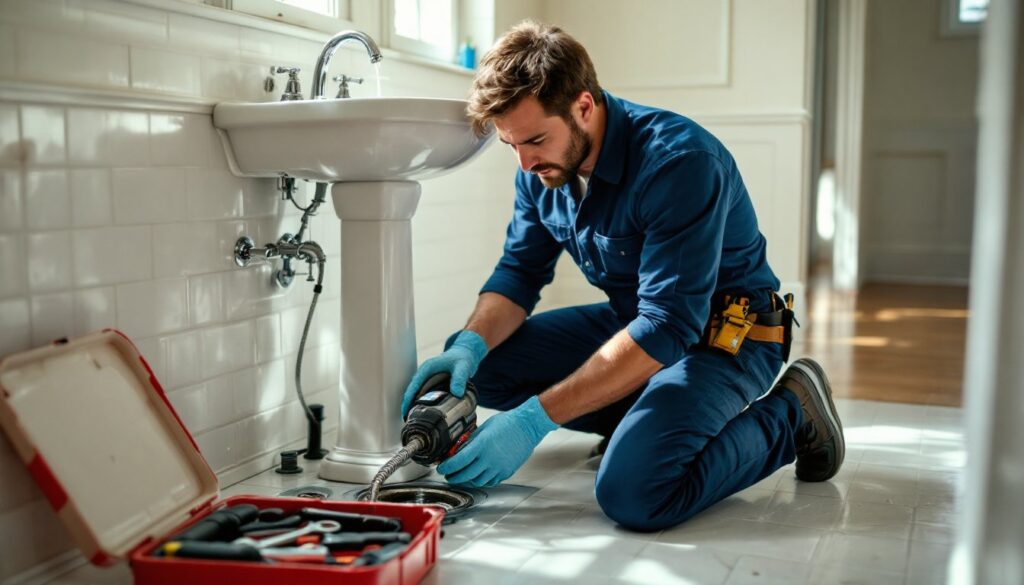
A handheld drain snake (also called a drum auger) handles hair clogs up to 25 feet into the pipe. You can pick one up for $15-$30 at any hardware store. Feed the cable into the drain until you hit resistance, then crank the handle clockwise while pushing gently. The coiled tip grabs hair and pulls it back out. Always wear nitrile gloves, drain snakes come out disgusting.
For deeper clogs or main line work, a motorized auger (50-100 feet of cable) does the job, but rent one instead of buying unless you’re tackling multiple properties. These tools require some muscle: make sure two people are available if you’re running cable into a clean-out or main sewer line. Over-torquing can kink the cable or damage older pipes.
Avoid chemical drain cleaners (sodium hydroxide or sulfuric acid formulas) except as a last resort before calling a pro. They generate heat that can crack porcelain, corrode metal pipes, and create hazardous fumes. If you do use them, follow label instructions exactly, never mix products, and wear safety goggles and chemical-resistant gloves.
When to Call a Professional Drain Cleaning Service
Some clogs are beyond homeowner tools. Knowing when to stop fighting and call in a licensed plumber saves you from making a bad situation worse, or flooding your basement.
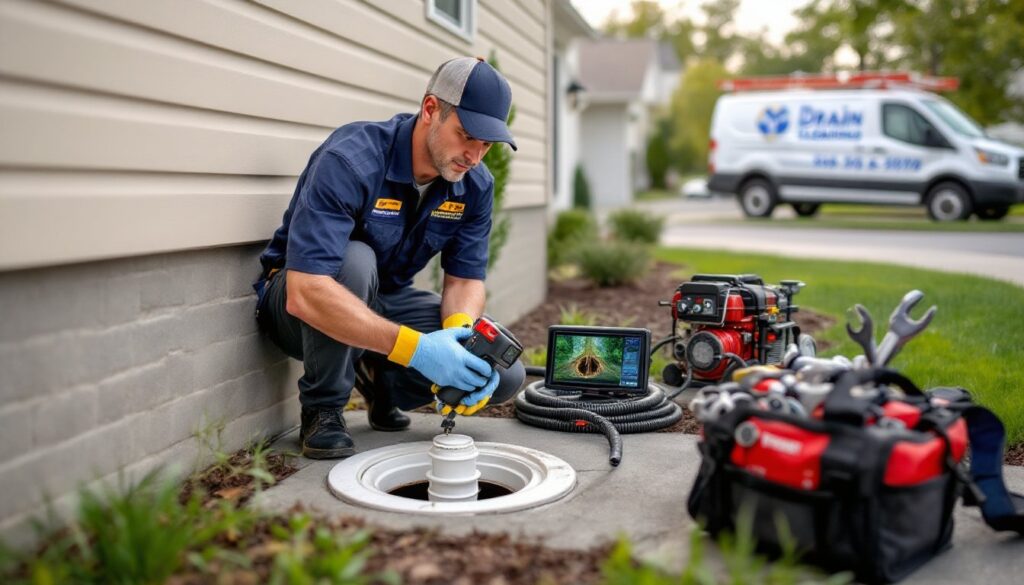
Call immediately if you have a main sewer line backup. Symptoms include multiple fixtures draining slowly at once, sewage coming up through floor drains, or toilets that won’t flush no matter how many times you plunge. Main line clogs often sit 40-100 feet from the house, well beyond the reach of a handheld snake. Pros use truck-mounted augers with 200+ feet of cable and cutting heads designed to slice through root masses.
Recurring clogs in the same drain mean you’ve got an underlying problem, a bellied pipe (sagging section that holds water and debris), severe scale buildup, or a foreign object lodged deep in the line. A plumber can run a video camera inspection through the drain to pinpoint the issue. Expect to pay $150-$300 for camera work in the Cincinnati area, but it beats guessing.
If you’ve already tried snaking and the clog returns within a few days, you’re likely dealing with roots or a partial pipe collapse. Hydro jetting, high-pressure water (3,000-4,000 PSI) that scours pipe walls clean, clears root intrusions and scale that mechanical snakes can’t touch. It’s not cheap ($350-$600 depending on access and line length), but it’s thorough.
Homeowners searching for reputable drain cleaning contractors should verify licensing and insurance before booking. Ohio doesn’t require state-level plumber licensing, but Cincinnati has municipal codes governing drain work, especially if it involves cutting into sewer laterals or installing clean-outs.
Older homes may need clean-out installation if there isn’t easy access to the main sewer line. A clean-out is a capped fitting that lets you insert a snake or camera without removing a toilet or going through a vent stack. Installation costs $200-$500 depending on location and whether the plumber has to cut concrete. It’s worth it if you’ve got an older home with frequent clogs, future service calls get cheaper and faster.
Finally, if you smell sewer gas even after clearing a clog, or if drains gurgle constantly, you might have a venting problem rather than a blockage. Drain-waste-vent (DWV) systems rely on air pressure balance to work correctly. Blocked or missing roof vents cause slow drainage and odors. That’s code-level plumbing work, not a DIY fix.
Preventing Future Drain Clogs in Your Cincinnati Home
Prevention beats plunging every time. A few simple habits and minor upgrades keep drains flowing and reduce emergency calls.
Install mesh drain screens in every sink, tub, and shower. Stainless steel or silicone screens catch hair, food particles, and soap chunks before they enter the drain. Clean them weekly, takes 30 seconds and prevents 90% of bathroom clogs.
Never pour grease, cooking oil, or fat down kitchen drains, even if you run hot water or use a disposal. Fats solidify as they cool, and Cincinnati’s clay sewer lines (common in older neighborhoods) don’t handle grease well. Pour cooled grease into an old can or jar and toss it in the trash.
Run hot water for 30 seconds after every use of the kitchen sink, especially after washing greasy pans. This flushes residual oils through the trap and into the main line before they congeal. Once a month, flush each drain with a full kettle of boiling water to dissolve light buildup.
If you’ve got a garbage disposal, use it correctly: run cold water (not hot) while grinding food, and keep the water running for 10 seconds after the grinding stops. Cold water solidifies fats so the disposal can chop them into small pieces: hot water liquefies fats that then coat the pipes downstream. Avoid grinding fibrous waste like celery, onion skins, or potato peels, these wrap around the impeller and create clogs at the discharge pipe.
For homes with trees near the sewer lateral, consider annual or bi-annual root treatment. Professional services can apply root-killing foam (usually copper sulfate or foaming herbicide) through a clean-out or toilet. This isn’t a permanent fix, but it slows root growth and extends the time between snaking calls. Expect to spend $150-$250 per treatment. Estimates for preventive maintenance often factor in regional variables tracked by resources like HomeAdvisor.
Avoid flushing anything except toilet paper and human waste. “Flushable” wipes don’t break down like TP, they’re a leading cause of sewer backups nationwide. Toss them in the trash.
If you’re on a septic system (more common in outlying areas like Anderson Township or Clermont County), have the tank pumped every 3-5 years. Full tanks push solids into the drain field, which clogs soil and causes expensive repairs.
Finally, know where your main sewer clean-out is located. It’s usually a 4-inch diameter white or black PVC cap in the basement, crawlspace, or outside near the foundation. If you don’t have one, ask a plumber about installation next time you need service, it’s a smart investment. Planning tools on sites like ImproveNet can help estimate costs for installations and upgrades before you commit to a project.
Conclusion
Clear drains aren’t glamorous, but they’re essential. Most Cincinnati homeowners can handle minor clogs with a plunger, snake, or baking soda flush. Recognizing when a problem’s out of your depth, tree roots, main line backups, or recurring blockages, saves you from DIY disasters and keeps your home running smoothly. Stick to prevention habits, keep screens clean, and know a good plumber’s number. Your pipes will thank you.