Table of Contents
ToggleA slow-draining kitchen sink isn’t just inconvenient, it’s a warning sign. While pouring chemical drain cleaner down the pipe might seem like a quick fix, persistent clogs often point to deeper issues: grease buildup in the trap, food debris lodged in the drain line, or even a developing blockage in the main sewer lateral. Homeowners face a choice: tackle it with a hand auger and elbow grease, or call in a professional drain cleaning service. Knowing when DIY stops being practical, and what pros actually do when they show up, can save both time and money.
Key Takeaways
- Kitchen drain cleaning services are necessary when DIY methods fail, water backs up into multiple fixtures, or foul odors and gurgling persist despite home treatment attempts.
- Professional drain cleaning typically includes motorized augering (reaching 50–100 feet), diagnostic assessment, and water flow testing, with advanced options like hydro jetting and video camera inspection for stubborn clogs.
- Standard kitchen drain cleaning services cost between $150–$350, while hydro jetting adds $350–$600 and video inspection runs $100–$300, with pricing varying by location, clog depth, and accessibility.
- Choose a reputable drain cleaning company by verifying licensing and insurance, reviewing customer feedback for reliability, confirming they use modern equipment like video inspection, and requesting transparent pricing with warranties or guarantees.
- DIY drain cleaning works for recent, localized clogs within 15–25 feet using a hand auger or plunger, but recurring blockages, shared drain line obstructions, or older pipe materials (cast iron, clay tile) require professional intervention.
- Hydro jetting at 3,000–4,000 PSI effectively removes grease and biofilm buildup but isn’t suitable for fragile, corroded, or older drain pipes that could crack under pressure.
Signs Your Kitchen Drain Needs Professional Cleaning
Not every slow drain requires a service call, but certain symptoms indicate a problem beyond the reach of a plunger or a bottle of enzyme cleaner.
Persistent slow drainage even though multiple DIY attempts suggests a clog deeper in the line, often 10 to 15 feet past the P-trap, where hand augers can’t reach. If water backs up in multiple fixtures (kitchen sink and dishwasher, for example), the blockage is likely in a shared drain line or further downstream.
Foul odors that don’t clear after cleaning the disposal or running hot water often signal decomposing organic matter trapped in the drain line or a venting issue. Grease, fat, and food particles create biofilm that coats pipe walls: over time, this narrows the effective diameter of the pipe.
Gurgling sounds when the sink drains or the dishwasher runs indicate a venting problem or partial blockage. Air trapped by the clog tries to escape through the water, causing that distinctive noise. This is common in older homes with cast iron or galvanized steel drain lines that have corroded internally.
Water backing up into the sink when running the dishwasher or washing machine points to a shared drain line obstruction. This isn’t just annoying, it can cause cross-contamination if wastewater from one fixture flows into another.
If you’ve already snaked the drain with a 25-foot hand auger and the problem returns within a few days, it’s time to call a pro. Recurring clogs in the same location usually mean the underlying cause, root intrusion, pipe sag, or heavy grease accumulation, hasn’t been addressed.
What Professional Kitchen Drain Cleaning Services Include
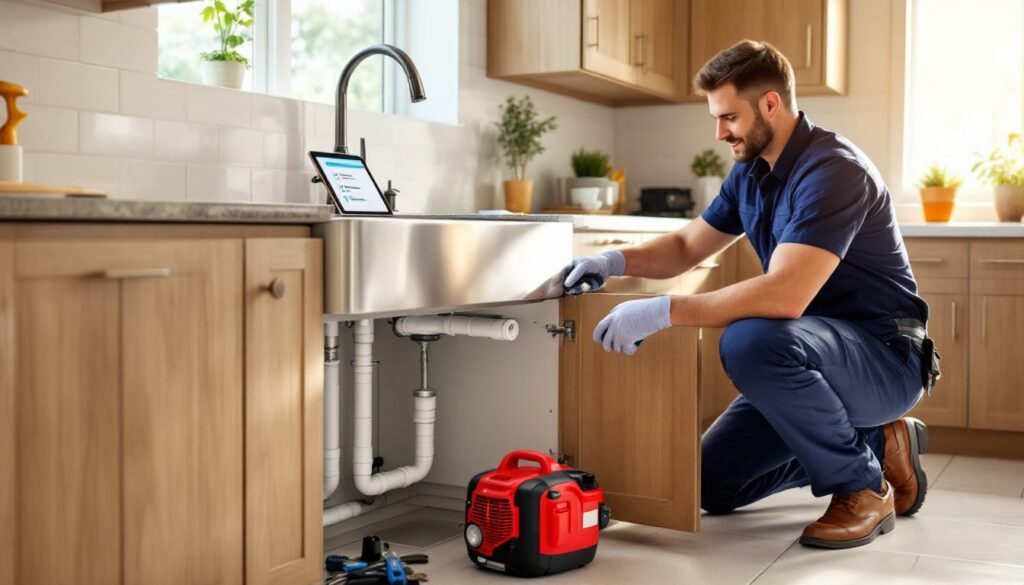
A reputable drain cleaning company does more than just run a snake through the pipe. The service typically begins with a diagnostic assessment: the technician asks about symptoms, checks other fixtures, and may perform a visual inspection of accessible plumbing to rule out obvious issues like a clogged P-trap or a disconnected vent.
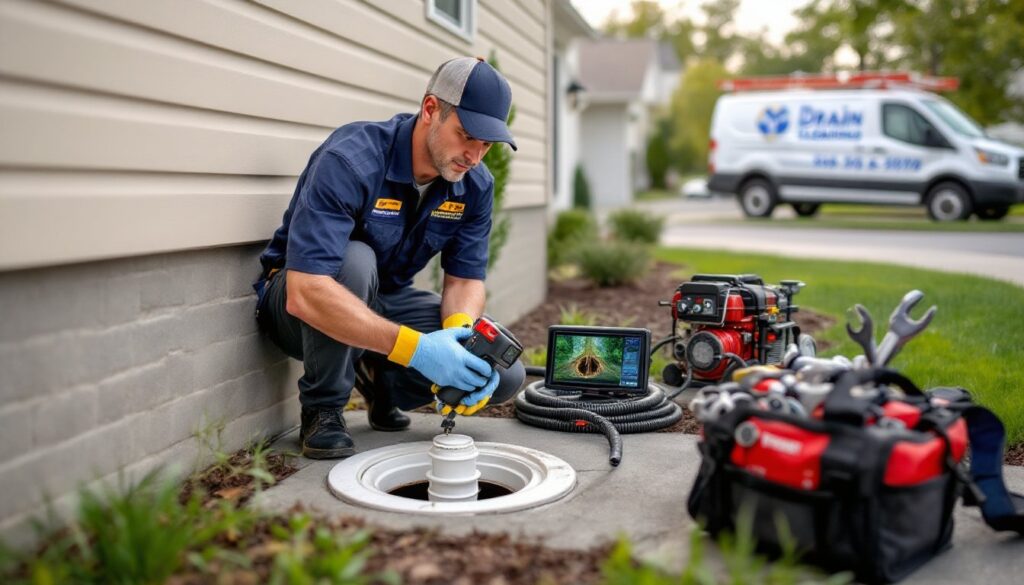
Most pros use a motorized drain auger (also called a drain snake or rooter) with interchangeable heads. These machines can reach 50 to 100 feet into the drain line, with cable diameters ranging from 1/4-inch for sinks to 5/8-inch for main lines. The rotating head breaks up clogs, cuts through grease, and can even shear small tree roots in outdoor lines.
After clearing the blockage, many services offer a water flow test to confirm drainage is restored. Some companies include a follow-up visit if the clog returns within a specified period (often 30 to 90 days), though this varies by provider.
Hydro Jetting and Video Inspection Technology
For stubborn or recurring clogs, pros may recommend hydro jetting, a high-pressure water system that scours the inside of the pipe, removing grease, scale, and biofilm. Hydro jetting uses water pressures between 3,000 and 4,000 PSI, enough to clear buildup without damaging most modern PVC or ABS drain lines. It’s especially effective in commercial kitchens or homes with chronic grease problems. But, hydro jetting isn’t suitable for older, fragile pipes (cast iron with significant corrosion, Orangeburg fiber pipe, or clay tile) that might crack under pressure.
Video camera inspection has become standard for complex drain issues. A waterproof camera mounted on a flexible cable is fed into the drain line, transmitting real-time footage to a monitor. This allows the technician to identify the exact location and nature of the blockage, whether it’s roots, a collapsed pipe, or an object lodged in the line. The camera head includes a locator beacon, so the technician can mark the precise spot above ground if excavation or pipe replacement becomes necessary.
Some companies bundle video inspection with every service call: others charge separately (typically $100 to $300, depending on line length and accessibility). For a one-time clog, video inspection may be overkill. For recurring problems or before buying a home, it’s a worthwhile investment.
Average Cost of Kitchen Drain Cleaning Services
As of 2026, most homeowners pay between $150 and $350 for a standard kitchen drain cleaning service call. This typically covers diagnosis, cable augering up to 50 feet, and basic cleanup. Prices vary by region, time of day, and the complexity of the clog.
Flat-rate pricing is common: companies charge a set fee for clearing a kitchen drain, with additional charges if the blockage is in a shared line or requires more than standard augering. Hourly rates (usually $80 to $150 per hour) are less common but may apply for complex jobs or older homes where access is difficult.
According to HomeAdvisor, hydro jetting adds $350 to $600 to the total cost, depending on line length and the severity of buildup. Video camera inspection, when not included, typically runs $100 to $300. Emergency or after-hours service (evenings, weekends, holidays) can double the base rate.
Factors that affect pricing:
- Location of the clog: A blockage in the P-trap under the sink costs less to clear than one 30 feet down the main drain line.
- Accessibility: Drain cleanouts installed at key points make the job faster and cheaper. If there’s no cleanout and the technician has to pull a toilet or cut into a wall, labor costs increase.
- Pipe material and age: Older cast iron or clay tile pipes may require gentler techniques (or video inspection first) to avoid damage, which adds time.
- Scope of service: Some companies include a warranty or follow-up visit: others charge extra for return trips.
Many drain cleaning companies offer service contracts or maintenance plans (typically $100 to $200 per year) that include annual inspections, discounted service calls, and priority scheduling. For homeowners with older plumbing or recurring issues, a maintenance plan can be cost-effective.
How to Choose the Right Drain Cleaning Company
Not all drain cleaning services are created equal. A quick Google search will turn up national franchises, independent plumbers, and dedicated rooter services, each with different capabilities, pricing structures, and reputations.
Licensing and insurance are non-negotiable. Most jurisdictions require plumbers to hold a state or local license, which ensures they’ve met minimum training and safety standards. Ask for the license number and verify it with your state’s licensing board. Liability insurance and workers’ compensation protect you if something goes wrong, like a damaged pipe or an injury on your property.
Reviews and references offer insight into reliability and quality. Check local drain cleaning professionals for recent customer feedback, paying attention to comments about punctuality, pricing transparency, and follow-up service. A handful of negative reviews is normal: look for patterns (consistent complaints about hidden fees, for example).
Equipment and techniques matter. Ask whether the company uses video inspection and hydro jetting, or if they rely solely on cable augering. For straightforward clogs, a cable auger is usually sufficient. For recurring issues, video inspection can diagnose problems a cable can’t fix.
Pricing transparency separates reputable companies from fly-by-night operators. A good company provides a clear estimate before starting work, explains what’s included, and discloses any potential add-on charges (like disposal fees or after-hours rates). Be wary of unusually low quotes, they often come with hidden fees or substandard work.
Warranties and guarantees demonstrate confidence in the work. Many companies offer a 30- to 90-day guarantee: if the same drain clogs again within that window, they return at no charge. Read the fine print, some warranties exclude certain types of clogs (like roots or foreign objects) or require regular maintenance.
DIY vs. Professional Drain Cleaning: Making the Right Choice
Homeowners can clear many kitchen drain clogs without professional help, but there’s a point where DIY becomes inefficient or even risky.
When to DIY:
- The clog is recent and localized (slow drainage in one sink, no other symptoms).
- You have access to the P-trap under the sink and can remove and clean it.
- A plunger, hand auger (25-foot cable), or enzyme-based drain cleaner resolves the issue.
- The drain responds to treatment and stays clear for weeks or months.
When to call a pro:
- The clog recurs within days of clearing it.
- Water backs up into other fixtures (dishwasher, adjacent sink).
- Gurgling sounds or foul odors persist even though cleaning.
- You’ve snaked the drain with a hand auger and hit a solid obstruction that won’t budge.
- The home has a septic system and you suspect a problem beyond the drain line.
- The drain line is old (cast iron, clay tile, or Orangeburg fiber pipe) and you’re concerned about damaging it.
Safety considerations: Chemical drain cleaners (sodium hydroxide or sulfuric acid-based) can damage pipes, especially older metal or PVC, and pose health risks if mishandled. They’re also ineffective against grease clogs and can make professional cleaning harder if residue remains in the line. If you choose a chemical cleaner, use it exactly as directed, wear gloves and eye protection, and never mix products.
Hand-cranked drain augers are effective for clogs within 15 to 25 feet of the drain opening. For deeper blockages, a motorized auger is necessary, and most DIYers don’t own one. Rental stores carry them, but improper use can damage pipes or injure the user. If you’re not comfortable running a motorized auger, call a pro.
For homeowners who enjoy tackling plumbing projects, investing in a quality hand auger (with a 1/4-inch or 3/8-inch cable) and learning proper technique can handle the majority of kitchen drain clogs. Keep a bucket, old towels, and rubber gloves on hand for the inevitable mess.
Conclusion
Most kitchen drain clogs are manageable with a plunger and a little patience, but recurring or deep-line blockages call for professional intervention. Knowing the signs, understanding what pros actually do, and choosing a reputable company makes the process straightforward. And if the drain keeps acting up even after professional cleaning, it might be time to consider pipe replacement or a more thorough inspection, some problems can’t be snaked away.