Table of Contents
ToggleOver time, dishwashers accumulate grease, mineral deposits, soap scum, and food particles that settle in hidden corners, spray arms, and the drain filter. Even though dishwashers are designed to clean, they need cleaning themselves to keep working efficiently. A dirty dishwasher doesn’t just smell bad, it can leave residue on supposedly clean dishes and reduce the machine’s lifespan. The good news? A simple bottle of white vinegar can restore a dishwasher’s performance and eliminate odors without harsh chemicals or expensive cleaners. This guide walks through exactly how to deep clean a dishwasher using vinegar, what to watch out for, and how often to do it.
Key Takeaways
- Dishwasher cleaning vinegar is an effective, non-toxic, and inexpensive natural solution that breaks down mineral deposits, soap scum, and grease without damaging rubber seals or stainless steel interiors.
- To deep clean your dishwasher with vinegar, place 2 cups of white distilled vinegar in a dishwasher-safe bowl on the top rack and run a full hot water cycle without detergent for at least 90 minutes.
- Clean the drain filter, spray arms, and door gasket before running the vinegar cycle to ensure maximum effectiveness and prevent poor cleaning performance.
- Clean your dishwasher with vinegar once a month for routine maintenance, or every two to three weeks if you have hard water or heavy usage, but avoid cleaning more than once weekly to protect rubber seals.
- Never mix vinegar with bleach or detergent, use cold water, or pour it into the rinse aid dispenser for daily loads, as these mistakes reduce effectiveness and can damage dishwasher components.
Why Vinegar Is the Perfect Natural Dishwasher Cleaner
White vinegar is a powerhouse for dishwasher maintenance thanks to its acidity, which sits around 5% acetic acid. This mild acid breaks down mineral buildup from hard water, dissolves soap scum, and cuts through grease without damaging rubber seals, plastic components, or stainless steel interiors.
Unlike bleach or commercial dishwasher cleaners, vinegar is non-toxic, inexpensive, and already sitting in most pantries. It neutralizes odors instead of just masking them, and it won’t leave behind chemical residues that could transfer to dishes. For households on well water or in areas with high mineral content, vinegar is especially useful for dissolving limescale that clogs spray arm holes and dulls the interior finish.
That said, vinegar isn’t a disinfectant. It won’t kill all bacteria or mold spores the way a sanitizing cleaner would. For routine maintenance and odor control, though, it’s tough to beat. And because it’s acidic, it shouldn’t be overused, monthly cleaning is effective without risking damage to gaskets or seals over time.
What You’ll Need to Clean Your Dishwasher with Vinegar
Gather these items before starting:
- White distilled vinegar (not apple cider or cleaning vinegar, distilled white vinegar has the right acidity without added coloring or stronger acids that might harm components)
- Measuring cup (2 cups capacity)
- Soft-bristle brush or old toothbrush (for scrubbing tight spots around the door gasket and spray arms)
- Microfiber cloth or sponge
- Dishwasher-safe bowl or cup (must hold at least 2 cups of liquid and sit upright on the top rack)
- Optional: baking soda (for extra deodorizing on the bottom of the tub)
No need for specialty tools or products. A standard gallon jug of distilled white vinegar costs a few dollars and will last through multiple cleanings. Avoid using apple cider vinegar or flavored varieties, they can leave sticky residues or stains.
Step-by-Step: How to Deep Clean Your Dishwasher Using Vinegar
Preparing Your Dishwasher for Cleaning
Start by emptying the dishwasher completely. Remove all dishes, utensils, and racks if possible, at minimum, pull out the bottom rack for easier access.
Locate the drain filter at the bottom of the tub (usually a cylindrical or flat mesh screen that twists or lifts out). Rinse it under hot water and scrub away any trapped food particles, grease, or sludge with a soft brush. A clogged filter is one of the main causes of poor cleaning performance and foul smells. Check your owner’s manual if the filter mechanism isn’t obvious, some models have multi-part filters that need to be disassembled.
Next, inspect the spray arms. Remove them if they twist or pop off (most do). Hold each arm up to the light and check the small holes for clogs. Use a toothpick or thin wire to clear any mineral deposits or debris. Rinse the spray arms under running water.
Wipe down the door gasket (the rubber seal around the door opening) with a damp cloth. Grime, mold, and soap scum collect here. Use an old toothbrush dipped in a vinegar-water solution to scrub stubborn spots.
Finally, check the bottom of the tub for any large debris, standing water, or buildup around the drain. A quick wipe with a sponge ensures nothing interferes with the vinegar cycle.
Running the Vinegar Cleaning Cycle
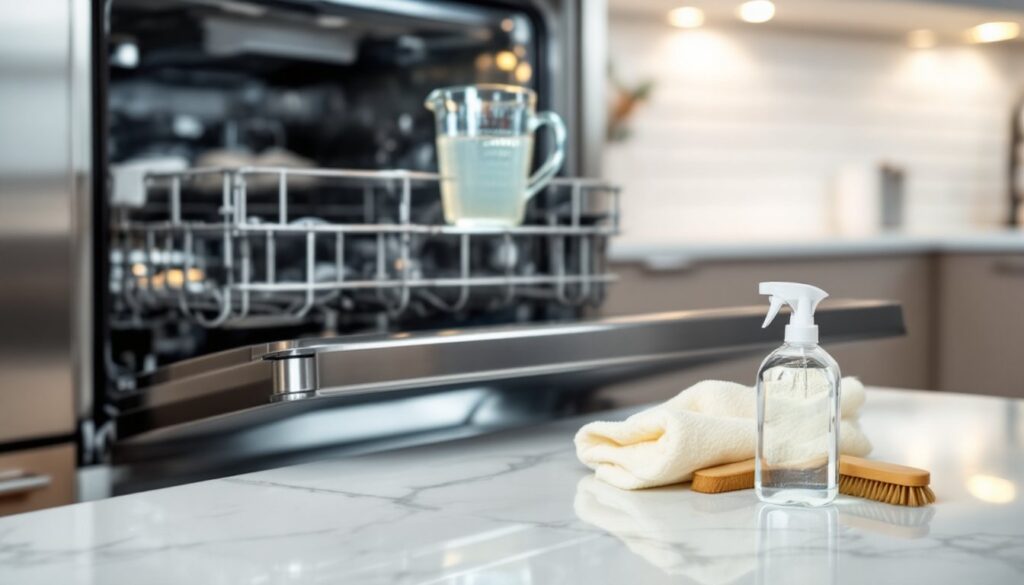
Once the dishwasher is prepped, place a dishwasher-safe bowl or measuring cup filled with 2 cups of white distilled vinegar on the top rack. Position it upright so it won’t tip during the cycle. Homeowners looking for guidance on cleaning appliances with natural products often prefer this simple method.
Don’t add detergent, rinse aid, or any other cleaners. The vinegar works solo.
Close the door and run a full hot water cycle. Select the hottest and longest wash setting available, often labeled “heavy,” “pots and pans,” or “sanitize.” High heat activates the vinegar’s cleaning power and helps dissolve grease and mineral buildup. The cycle should run for at least 90 minutes.
As the cycle runs, the vinegar disperses throughout the interior, breaking down residue on the walls, racks, heating element, and spray arms. The steam helps lift grime, and the acidity neutralizes odors.
When the cycle finishes, open the door and let the interior air out for 15–20 minutes. The vinegar smell dissipates quickly.
For extra deodorizing, sprinkle 1 cup of baking soda across the bottom of the empty tub and run a short hot rinse cycle (no vinegar this time). Baking soda is mildly abrasive and helps scrub away any remaining stains or smells. This step is optional but effective if the dishwasher had a strong odor before cleaning.
How Often Should You Clean Your Dishwasher with Vinegar?
For most households, a vinegar deep clean once a month keeps the dishwasher running efficiently and odor-free. Homes with hard water, heavy dishwasher use (multiple loads per day), or well water may benefit from cleaning every two to three weeks.
Between deep cleans, perform quick maintenance:
- Weekly: Rinse the drain filter under hot water to remove food particles.
- Bi-weekly: Wipe down the door gasket and edges with a damp cloth.
- Monthly: Inspect and clean spray arm holes.
Signs that a dishwasher needs cleaning sooner include cloudy glassware, white film on dishes (mineral buildup), musty smells, or visible grime around the door seal. Those dealing with stubborn buildup often consult home cleaning resources for troubleshooting.
Don’t clean with vinegar more than once a week. Overuse can degrade rubber seals and gaskets over time due to its acidity. If odors persist after a vinegar cleaning, check the drain hose and garbage disposal connection, trapped food or standing water outside the dishwasher tub can cause smells that vinegar won’t fix.
Common Mistakes to Avoid When Using Vinegar in Your Dishwasher
Mixing vinegar with bleach or detergent. Never combine vinegar with bleach, it creates toxic chlorine gas. Don’t run vinegar with dish detergent, either. Detergent reduces vinegar’s effectiveness and can create excess suds. Run the vinegar cycle solo.
Using too much vinegar. More isn’t better. Two cups is the standard amount for a full-size dishwasher. Using a gallon won’t improve results and wastes product.
Skipping the filter cleaning. Vinegar won’t dissolve a clogged filter. Always remove and scrub the filter before running the vinegar cycle. A dirty filter blocks water flow and limits cleaning effectiveness.
Running a cold cycle. Vinegar works best with hot water. If the hot water heater is set below 120°F, the cycle won’t be as effective. Most dishwashers have internal heaters that boost temperature, but starting with hot water helps.
Using vinegar in place of rinse aid during regular loads. Some DIY advice suggests pouring vinegar into the rinse aid dispenser for every load. This isn’t recommended. Over time, the acidity can damage the dispenser valve and rubber components. Vinegar is for periodic deep cleaning, not daily use. For ongoing hard water issues, use a commercial rinse aid designed for dishwashers.
Ignoring manufacturer guidance. A few dishwasher brands (notably Bosch) advise against using vinegar due to potential damage to interior components. Check the owner’s manual. If vinegar is discouraged, look for a citric acid-based cleaner instead, it’s gentler and achieves similar results. Resources like Martha Stewart often highlight alternative cleaning methods for sensitive appliances.
Forgetting to wipe the exterior and controls. While the vinegar cycle cleans the interior, don’t overlook the outside. Wipe down the control panel, handle, and door front with a damp microfiber cloth and a drop of dish soap. Stainless steel exteriors benefit from a stainless cleaner or a vinegar-water spray (1:1 ratio) followed by buffing with a dry cloth to avoid streaks.