Table of Contents
ToggleIndustrial gutter systems aren’t just scaled-up versions of residential gutters, they’re critical drainage infrastructure that can cost businesses thousands in water damage when neglected. Warehouses, shopping centers, apartment complexes, and manufacturing facilities rely on these systems to handle massive water volumes, often measured in hundreds of gallons per minute during heavy storms. Unlike a homeowner who can grab a ladder and scoop out leaves on a Saturday morning, industrial gutter maintenance demands specialized equipment, safety protocols, and a working knowledge of commercial building codes. This guide walks through what makes industrial gutter cleaning distinct, the tools required, and the proven process professionals use to keep large-scale systems flowing.
Key Takeaways
- Industrial gutter cleaning prevents thousands of dollars in water damage, foundation erosion, and structural failures that residential homeowners rarely face.
- Industrial gutter systems require specialized access equipment like boom lifts and OSHA-compliant fall protection, making professional industrial gutter cleaning mandatory rather than optional.
- Most commercial properties need quarterly or semi-annual cleanings based on tree coverage, roof design, and environmental factors, with documented maintenance required for insurance claims.
- Professional industrial gutter cleaning involves systematic debris removal, high-volume flushing, downspout clearing, and photo documentation to ensure compliance and liability protection.
- Budget $0.75–$1.50 per linear foot for professional service, and track all cleaning records since insurance adjusters require maintenance logs to approve water damage claims.
What Is Industrial Gutter Cleaning and Why Does It Matter?
Industrial gutter cleaning refers to the maintenance of large-scale gutter and downspout systems on commercial, industrial, and multi-unit residential buildings. These systems typically span hundreds of linear feet, handle water runoff from roofs exceeding 10,000 square feet, and connect to underground storm drains or municipal water systems.
The stakes are higher than residential work. A clogged industrial gutter can cause:
- Foundation erosion from thousands of gallons of misdirected water
- Roof membrane damage when ponding water backs up under flashing
- Interior flooding in retail spaces, warehouses, or parking structures
- Structural freeze damage in cold climates where standing water expands in joints
- Liability issues if water overflow damages tenant property or creates slip hazards
Many commercial leases and property insurance policies require documented gutter maintenance on a quarterly or semi-annual basis. Property managers who skip cleanings often face denied claims after water damage events, since insurers can point to neglected maintenance as a policy violation.
From a safety perspective, industrial gutter work falls under OSHA regulations for fall protection and confined space entry when accessing interior box gutters or scuppers. This isn’t a DIY territory for building owners, it requires trained personnel with proper certifications.
Key Differences Between Industrial and Residential Gutter Cleaning
The gap between cleaning gutters on a ranch house and servicing a 40,000-square-foot distribution center is enormous. Here’s what separates the two:
Scale and Access
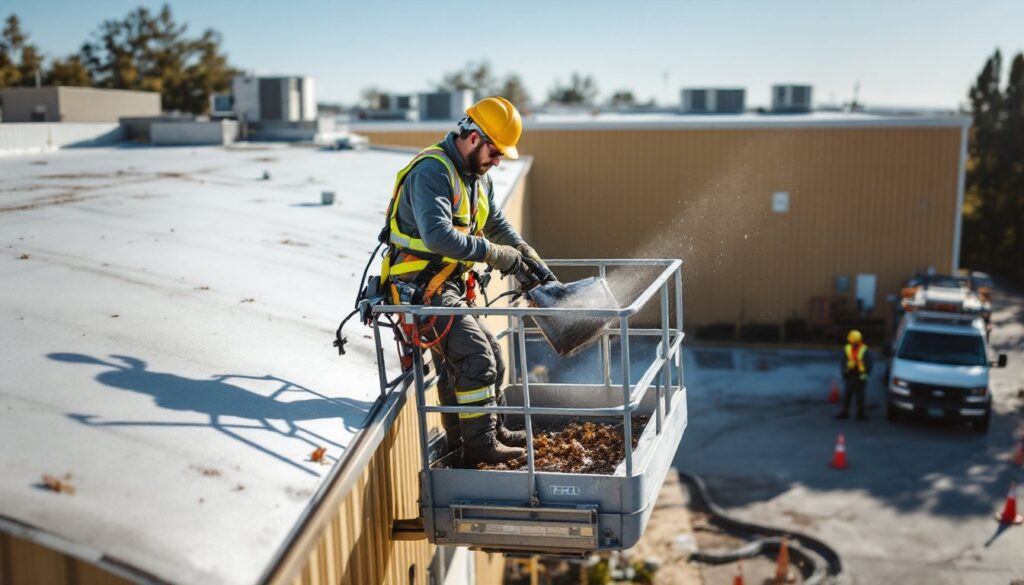
Residential gutters typically run 100-200 linear feet on single or two-story homes. Industrial systems can exceed 1,000 linear feet on buildings ranging from two to six stories or higher. Access requires boom lifts, scissor lifts, or permanent roof access ladders with fall arrest anchor points. Extension ladders won’t cut it.
Gutter Design
Most homes use 5-inch or 6-inch K-style aluminum gutters. Commercial buildings often feature box gutters (built into the roof structure), internal drains with sump receivers, or parapet scuppers. Material choices include galvanized steel, copper, or PVC-lined concrete, each with different cleaning considerations and corrosion patterns.
Debris Volume
A residential gutter might hold a few buckets of leaves and pine needles. Industrial systems accumulate hundreds of pounds of organic matter, roof ballast gravel, HVAC condensate residue, and wind-blown trash. Disposal requires coordinating with waste haulers, especially if the debris contains roofing tar or industrial dust.
Water Flow Rates
Residential downspouts handle 1-3 gallons per minute in moderate rain. Industrial systems sized per International Plumbing Code (IPC) calculations can see peak flows exceeding 100 GPM per downspout during storm events. A partial blockage that might cause a minor overflow at home can trigger catastrophic flooding in a commercial setting.
Regulatory Requirements
Homeowners clean gutters on their own schedule. Commercial property often falls under local stormwater management ordinances, which mandate regular inspections and documentation. Facilities with rooftop equipment installations may also need HVAC technicians present during cleaning to avoid damaging condensate lines or exhaust vents.
Essential Equipment and Tools for Industrial Gutter Maintenance
Industrial gutter cleaning isn’t a garden hose and bucket operation. Professionals rely on specialized gear to work safely and efficiently at height.
Access Equipment
- Boom lifts (40-60 ft reach): Required for multi-story buildings with parapet walls or setback roof sections
- Scissor lifts (20-30 ft platform height): Stable for ground-level work on single-story warehouses with wide aprons
- Permanent roof access systems: Ladders with safety cages, guardrail systems, or horizontal lifelines installed per ANSI Z359 standards
Personal Protective Equipment (PPE)
- Full-body harness with shock-absorbing lanyard and twin-leg design for 100% tie-off
- Hard hat (Type I minimum, Type II for facilities with overhead crane operations)
- Safety glasses and nitrile gloves rated for chemical exposure if dealing with roofing sealants
- Slip-resistant boots with electrical hazard protection if working near rooftop HVAC or lighting circuits
Debris Removal Tools
- Gutter scoops (14-16 inch industrial models with reinforced edges)
- Shop vacuums (12+ gallon wet/dry models with HEPA filtration for dust control)
- Pressure washers (2,000-3,000 PSI gas models: avoid higher pressures that can damage gutter seams)
- Drain augers (motorized ½-inch or ¾-inch cables for clearing downspout blockages)
- Leaf blowers (backpack models with 200+ MPH output for initial debris clearing)
Inspection Gear
- Telescoping poles with cameras to inspect interior box gutters without entry
- Moisture meters to check for water intrusion in fascia or roof decking
- Digital calipers to measure gutter pitch (should slope ⅛ inch per 10 feet minimum)
For property managers evaluating contractor qualifications, confirm that vendors carry proof of equipment inspection (boom lifts require annual certification) and operator training documentation.
Step-by-Step Industrial Gutter Cleaning Process
Professional industrial gutter cleaning follows a structured workflow to ensure thorough results and jobsite safety.
Safety Protocols and Pre-Cleaning Inspection
Before any debris removal begins, conduct a hazard assessment:
- Establish a safety perimeter around lift equipment with cones or barriers to prevent pedestrian entry
- Lock out/tag out any rooftop electrical panels or mechanical systems near work zones per OSHA 1910.147
- Check weather conditions, wind speeds above 15 MPH make boom lift work unsafe: postpone if storms are forecast
- Verify fall protection anchor points are rated for 5,000 lbs and inspected within the past year
- Inspect the gutter system from the ground or lift basket:
- Look for sagging sections (indicates fastener failure or hidden rot)
- Note any rust-through or seam separation (these need repair before cleaning)
- Identify downspout locations and access points
- Document existing damage with photos (protects against liability claims)
Communicate with building occupants to alert them that water will run through interior drains during flushing. Retail tenants especially need advance notice to protect merchandise.
Debris Removal and System Flushing Techniques
With safety protocols in place, begin the cleaning sequence:
- Remove large debris by hand using gutter scoops, working from downspout openings toward dead ends to avoid pushing blockages into drains
- Bag debris in heavy-duty contractor bags (3-mil thickness minimum) and lower them via rope or lift basket, never toss materials off the roof
- Vacuum remaining sludge with a wet/dry vac, paying extra attention to gutter seams where organic matter compacts
- Flush the system with a pressure washer or high-volume garden hose, starting at the high point of each gutter run:
- Watch for standing water that doesn’t drain (indicates improper pitch or sag)
- Listen for gurgling in downspouts (suggests partial blockage or undersized drain)
- Clear clogged downspouts using a drain auger or by disassembling elbows and cleanouts, snake from the top down when possible to avoid forcing debris into underground drains
- Re-inspect after flushing to confirm water flows freely through all outlets and check interior ceilings below gutter runs for signs of active leaks
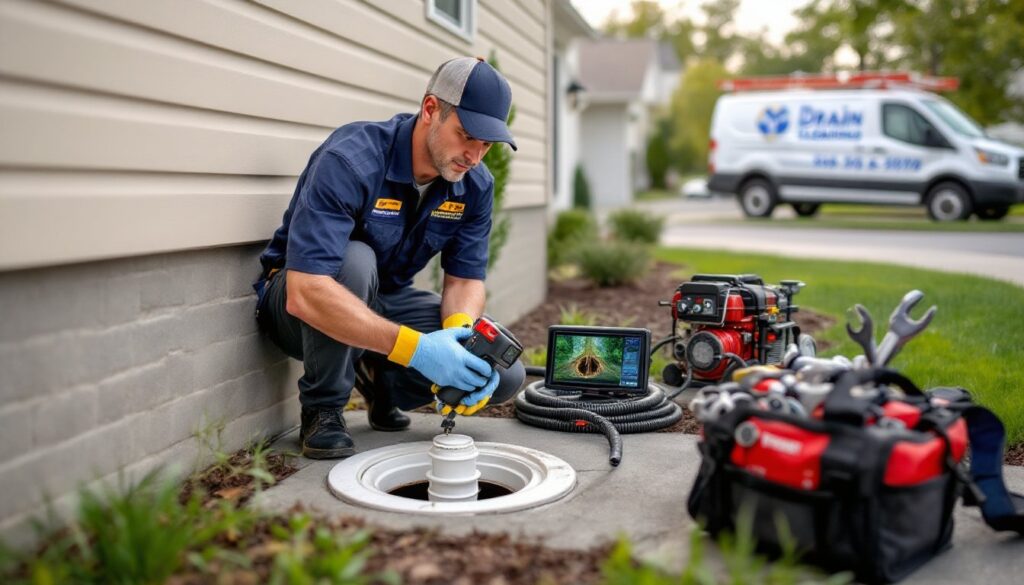
For facilities with underground storm systems, professionals often coordinate gutter cleaning with drain line video inspection to catch root intrusion or pipe collapse before it causes backups.
Document the work with time-stamped photos of cleaned gutters and cleared downspouts. Property managers need this for insurance compliance and warranty claims if leaks develop between service intervals.
How Often Should Industrial Gutters Be Cleaned?
Industrial gutter cleaning frequency depends on environmental factors and building design:
Quarterly (Every 3 Months)
Required for properties with:
- Heavy tree coverage (oak, maple, pine within 50 feet of the building)
- Flat or low-slope roofs (under 2:12 pitch) where debris doesn’t wash off naturally
- HVAC systems that discharge condensate into gutters
- Coastal locations with salt spray and windblown sand
Semi-Annually (Spring and Fall)
Sufficient for most commercial buildings in suburban or urban settings with moderate tree exposure. Schedule spring cleaning after pollen season and fall cleaning after leaf drop.
Annually (Before Winter)
Minimum acceptable frequency for warehouses in arid climates or buildings with minimal vegetation nearby. Even in low-debris environments, gutters accumulate wind-blown trash, roof granules, and bird nesting material.
Post-Storm Inspections
After hurricanes, severe thunderstorms, or winter ice events, conduct immediate inspections regardless of the regular schedule. Storm debris can overwhelm gutter capacity overnight, and freeze-thaw cycles can crack seams or pop fasteners.
Building codes don’t specify cleaning intervals, but NFPA 25 (fire protection systems) requires quarterly roof drain inspections for buildings with roof-level sprinkler systems, a good baseline for all industrial properties.
Property managers should track service dates in a maintenance log. Insurance adjusters routinely request gutter cleaning records when investigating water damage claims, and gaps longer than six months can jeopardize coverage.
For multi-tenant facilities, the lease should clearly assign gutter maintenance responsibility (typically falls to the landlord as a common area expense). Retail tenants need 24-hour advance notice before cleanings, since downspout flushing can disrupt operations or trigger false alarms on water-based fire suppression systems.
Industrial gutter maintenance isn’t glamorous work, but it’s non-negotiable for protecting building envelopes and avoiding five-figure water damage bills. Property owners without in-house facilities teams should budget $0.75-$1.50 per linear foot for professional cleaning, adjusted for building height and access difficulty.