Table of Contents
ToggleBathroom sink drains don’t just clog overnight, they slow down gradually as soap scum, toothpaste residue, hair, and mineral deposits layer up inside the pipes. By the time water starts pooling in the basin, you’re already dealing with weeks of buildup. The good news? Most bathroom sink drain cleaning jobs don’t require a plumber or harsh chemical cleaners. With a few household supplies and about 20 minutes of work, homeowners can restore flow and eliminate odors without tearing apart the P-trap. This guide walks through exactly how to clean a bathroom sink drain using methods that work for routine maintenance and minor clogs alike.
Key Takeaways
- Cleaning a bathroom sink drain with baking soda and vinegar is a non-toxic, effective method that takes about 20 minutes and requires only household supplies.
- Hair and soap scum are the primary causes of bathroom sink drain clogs, but removing the stopper and clearing visible debris first makes deeper cleaning much more effective.
- Installing a drain screen and flushing with hot water weekly are the easiest ways to prevent bathroom sink drain buildup and avoid future clogs.
- For stubborn clogs that resist natural cleaning, removing and scrubbing the P-trap manually is more effective than chemical drain cleaners and safer for your pipes.
- Regular monthly maintenance with baking soda and vinegar keeps your bathroom sink drain functioning smoothly without requiring harsh chemicals or professional plumber calls.
- Persistent slow drainage affecting multiple drains in your home may indicate a main line issue that requires a licensed plumber, not just routine bathroom sink drain cleaning.
Why Your Bathroom Sink Drain Gets Dirty and Clogged
Bathroom sinks collect a unique mix of gunk that kitchen drains don’t see. Hair is the primary culprit, short beard trimmings, long strands from brushing, and fine hair from washing all travel down the drain and snag on the stopper mechanism or inside the P-trap. Once hair lodges in place, it acts like a net, catching everything else that flows past.
Soap scum is the second major contributor. Bar soap contains fats and oils that don’t fully dissolve in water. These fats cling to pipe walls and bond with mineral deposits from hard water, forming a waxy, stubborn layer. Toothpaste, shaving cream, and facial cleansers add to this buildup, creating a sticky residue that narrows the drain opening over time.
Mineral deposits from hard water compound the problem. Calcium and magnesium in tap water leave behind chalky scale that hardens inside pipes, especially in homes with well water or municipal supplies high in dissolved minerals. Combined with organic matter, this scale can reduce a 1.25-inch drain opening to a fraction of its size.
Pop-up stoppers and drain assemblies with pivot rods are notorious for trapping debris. The horizontal rod that connects the stopper to the lift mechanism sits right in the path of everything going down the drain. Hair wraps around it, soap gloms onto it, and before long, you’ve got a slimy, matted blockage that restricts water flow. Regular cleaning and maintenance can prevent these issues from escalating into full clogs.
What You’ll Need to Clean Your Bathroom Sink Drain
Most bathroom sink drain cleaning tasks can be handled with supplies already in the house. Having the right tools on hand makes the job faster and less messy.
Materials:
- Baking soda (about 1/2 cup)
- White vinegar (about 1 cup)
- Boiling or very hot water (a full kettle or pot)
- Small bucket or bowl (to catch water if removing the P-trap)
- Old toothbrush or small scrub brush (for scrubbing the stopper)
- Dish soap (a few drops for degreasing)
Tools:
- Needle-nose pliers or tweezers (to pull hair from the drain opening)
- Adjustable wrench or slip-joint pliers (if removing the P-trap or pivot rod)
- Flashlight (to see inside the drain and under the sink)
- Rubber gloves (highly recommended, drain gunk is unpleasant)
Optional but helpful:
- Drain snake or zip-it tool (a plastic strip with barbed edges, available at hardware stores for under $3)
- Old towels or rags (to protect cabinet floors and wipe up spills)
- Small wire brush (for scrubbing inside the tailpiece or P-trap)
Avoid chemical drain cleaners (sodium hydroxide or sulfuric acid-based products) for routine maintenance. They’re effective on full clogs but can damage older metal pipes, corrode finishes, and create hazardous fumes. For regular cleaning, mechanical removal and natural agents work just as well without the risks.
Step-by-Step Guide to Cleaning Your Bathroom Sink Drain
Remove Visible Debris and Hair from the Drain
Start by clearing the surface-level blockage. Remove the pop-up stopper if your sink has one. Most stoppers lift straight out, but some are held in place by a pivot rod under the sink. If the stopper won’t budge, open the cabinet door and locate the horizontal rod connected to the tailpiece (the straight pipe just below the sink). Unscrew the pivot nut (usually hand-tight or requiring slip-joint pliers), pull the rod out slightly, and the stopper should lift free.
Once the stopper is out, inspect it. You’ll likely find a hair-and-slime mat wrapped around the base. Use an old toothbrush and dish soap to scrub it clean under running water. If the buildup is thick, soak the stopper in hot, soapy water for a few minutes first.
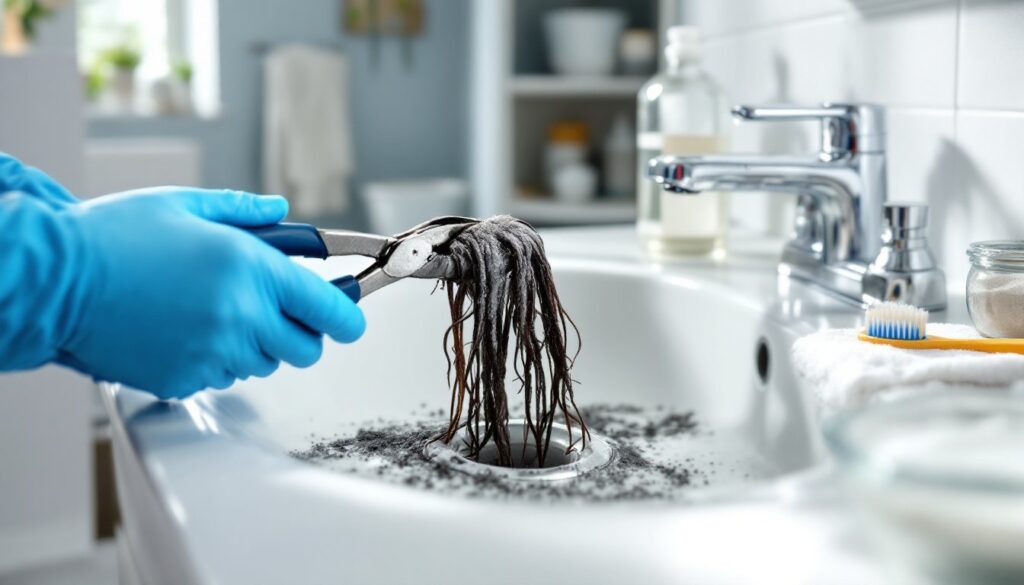
Shine a flashlight down the drain opening. Use needle-nose pliers or tweezers to pull out any visible hair, soap clumps, or debris. A zip-it tool works exceptionally well here, slide the barbed plastic strip down the drain, twist it slightly, and pull up. The barbs catch hair that’s clinging to the pipe walls. You might be surprised how much comes out.
Wipe down the drain flange (the metal ring around the opening) with a rag and a bit of all-purpose cleaner. Grime collects here and contributes to odors. This step alone can improve drainage noticeably if the clog is shallow.
Use Baking Soda and Vinegar for a Natural Deep Clean
With the stopper removed and surface debris cleared, it’s time to address buildup deeper in the pipes. The baking soda and vinegar method is a proven, non-toxic way to break down soap scum and organic residue.
Pour 1/2 cup of baking soda directly into the drain opening. Use a dry funnel or a rolled piece of paper to guide it down if needed. Follow immediately with 1 cup of white vinegar. The mixture will foam and fizz, this reaction helps lift gunk off pipe walls and deodorizes at the same time.
Plug the drain opening with a wet rag or the stopper (if clean) to contain the fizzing action inside the pipes. Let it sit for 15 to 30 minutes. For heavily neglected drains, leave it for up to an hour. The longer dwell time allows the acidic vinegar to dissolve mineral scale and the baking soda to scour away sticky residue.
While you wait, boil a kettle of water. If your pipes are PVC (common in modern homes), use very hot tap water instead, boiling water can soften PVC joints and cause leaks. Metal pipes (brass, copper, galvanized steel) handle boiling water just fine. When in doubt, stick with hot tap water.
Many home improvement resources recommend this method for regular upkeep, and it’s gentle enough to use monthly without damaging plumbing components.
Flush with Hot Water to Clear Residue
After the baking soda and vinegar have had time to work, remove the rag or stopper and slowly pour the hot water down the drain. Pour in a steady stream, not all at once, this gives the water time to push loosened debris through the P-trap and into the main drain line.
If the water drains freely, you’re done. Reinstall the stopper by reversing the removal steps: insert it into the drain, reconnect the pivot rod, and tighten the pivot nut until snug (don’t overtighten, plastic threads strip easily). Test the stopper mechanism to make sure it opens and closes smoothly.
If water still drains slowly, the clog may be deeper in the P-trap or tailpiece. At this point, you have two options: use a drain snake to physically break up the blockage, or remove the P-trap for manual cleaning. Removing the P-trap isn’t difficult, place a bucket under the trap, loosen the slip nuts on both ends with an adjustable wrench, and pull the curved pipe free. Dump the contents, rinse it out, scrub with a wire brush, and reinstall. This is messy but highly effective for stubborn clogs that don’t respond to natural cleaning techniques.
Safety note: Wear rubber gloves and eye protection if removing the P-trap. Old drain water can contain bacteria, and sudden spills can splash. If you’ve previously used chemical drain cleaners, let the pipes flush thoroughly with water before disassembly, residual chemicals can burn skin.
How to Prevent Future Buildup in Your Bathroom Sink Drain
Once the drain is clean, a few simple habits will keep it that way. Prevention is easier than dealing with recurring clogs.
Install a drain screen or hair catcher. These inexpensive mesh or silicone covers sit over the drain opening and catch hair before it enters the pipes. Clean the screen weekly, just lift it out, dump the hair in the trash, rinse, and replace. This single step eliminates the primary cause of bathroom sink clogs.
Flush with hot water weekly. After brushing teeth or washing up, run hot tap water down the drain for 30 seconds. This melts soap residue and flushes it through before it can harden. It’s not a deep clean, but it buys time between more thorough maintenance.
Use the baking soda and vinegar treatment monthly. Even if the drain seems fine, a monthly flush with 1/2 cup baking soda and 1 cup vinegar keeps buildup from accumulating. Follow with hot water, and you’ll rarely deal with slow drains.
Remove and clean the stopper every few months. Hair and slime collect on the stopper faster than anywhere else. A quick scrub with an old toothbrush and dish soap takes two minutes and prevents the stopper from becoming a blockage point.
Avoid pouring grease, thick lotions, or heavy creams down the sink. These don’t belong in bathroom drains. Wipe out containers with a paper towel before rinsing them in the sink. Grease solidifies in pipes and attracts other debris, creating stubborn clogs that resist DIY methods.
Check the pivot rod and stopper assembly annually. If water drains slowly even after cleaning, the pivot rod may be corroded or the stopper may not be sealing properly. Replacing a pop-up assembly is a straightforward project, most kits cost under $15 at home centers and include all necessary parts and instructions.
For homes with hard water, consider a water softener if scale buildup is severe. Softeners remove calcium and magnesium before they enter the plumbing, which reduces deposits throughout the house, not just in the bathroom sink. This is a bigger investment but pays off in longer-lasting fixtures and easier maintenance.
If you notice persistent slow drainage even though regular cleaning, or if multiple drains in the house are sluggish, the issue may be downstream in the main drain line or the vent stack. At that point, it’s time to call a licensed plumber. Drain issues that affect more than one fixture can indicate venting problems, root intrusion in sewer lines, or partial blockages beyond DIY reach. Don’t ignore chronic problems, what starts as a slow drain can escalate into a full backup if the main line is compromised.