Table of Contents
ToggleA sluggish drain is more than an annoyance, it’s a warning sign. Whether it’s a bathroom sink backing up or a shower pooling water around your ankles, most clogs don’t require an emergency plumber visit. A drain cleaning snake (also called a plumber’s snake or auger) is the tool homeowners reach for when a plunger fails. Unlike chemical drain cleaners that can damage pipes and harm the environment, a snake mechanically breaks through or retrieves blockages. Learning to use one properly saves money, prevents recurrence, and gives you control over routine maintenance.
Key Takeaways
- A drain cleaning snake mechanically breaks through blockages caused by hair, grease, and soap buildup—making it a cost-effective and environmentally safer alternative to chemical drain cleaners.
- Manual drum augers and handheld spindle snakes ($15–$60) handle 90% of household drain clogs and are ideal for first-time users, while electric power snakes ($100–$500+) suit landlords or those managing multiple properties.
- Proper technique—feeding the cable slowly, alternating push-pull motions, and avoiding forced pressure—prevents kinked cables and pipe damage when using a drain cleaning snake.
- Remove the P-trap directly if the snake can’t navigate it, and always match cable diameter (1/4-inch for standard sinks, 3/8-inch or larger for tubs and floor drains) to avoid scratching pipes.
- Call a professional plumber if multiple drains back up, the clog is beyond 25 feet, or you suspect tree roots, collapsed pipes, or old/fragile plumbing materials.
- Mastering basic drain snake use prevents recurring clogs and saves homeowners hundreds of dollars annually compared to repeated professional plumber visits.
What Is a Drain Cleaning Snake and How Does It Work?
A drain cleaning snake is a flexible metal cable with a corkscrew tip or cutting head designed to navigate the bends in household plumbing. The tool ranges from 15 to 50 feet in length, depending on the application. Manual versions feature a handle and crank: electric models use a motor to rotate the cable at high speed.
The mechanism is straightforward. The user feeds the cable into the drain opening, rotating it as it advances. When the tip encounters a clog, typically hair, grease, soap buildup, or foreign objects, the rotation either breaks up the blockage or snags it so it can be pulled out. The snake’s flexibility allows it to move through P-traps (the U-shaped pipe under sinks) and tight bends without damaging the pipe interior.
Unlike a plunger, which uses pressure to dislodge surface clogs, a snake physically reaches deep into the drain line. Most household models handle clogs 25 feet or less from the drain opening, which covers kitchen sinks, bathroom drains, and bathtub traps. For main sewer line blockages beyond that distance, a sewer auger or professional equipment is necessary.
Snakes work best on soft organic clogs (hair, food particles, soap scum) and minor grease accumulations. They won’t clear tree roots, mineral deposits, or collapsed pipes, those require hydro-jetting or pipe replacement.
Types of Drain Snakes: Choosing the Right Tool for Your Clog
Selecting the right snake depends on the clog location, pipe size, and severity. Using an undersized tool wastes time: oversized equipment can damage smaller pipes.
Manual Drain Snakes
Manual snakes rely on hand-cranking to feed and rotate the cable. They’re affordable, portable, and sufficient for most routine household clogs.
- Drum auger (canister snake): A coiled cable housed in a drum with a crank handle. Typical lengths run 25 to 50 feet with a 1/4-inch to 3/8-inch diameter cable. Best for sinks, tubs, and shower drains. The drum keeps the cable tidy and provides leverage.
- Handheld spindle snake (top snake): A compact version with a pistol-grip handle and 10 to 25 feet of cable. Ideal for sink traps and shallow clogs. Easier to store, but requires more physical effort on stubborn blockages.
- Toilet auger (closet auger): Designed specifically for toilets, with a 3 to 6-foot rigid shaft and protective rubber sleeve to avoid scratching porcelain. The short length and angled tip navigate the toilet trap without damaging the bowl.
Manual snakes cost between $15 and $60 depending on length and build quality. They require no electricity and give the user tactile feedback, making it easier to feel when the cable hits a clog.
Electric Drain Snakes
Electric (or power) snakes use a motor to spin the cable, reducing user fatigue and increasing cutting power. They’re faster and more effective on dense clogs but require careful handling.
- Handheld power auger: Features a drill-like motor with 25 to 50 feet of cable. Suitable for sink and tub drains. Most models include variable speed triggers and reversible rotation.
- Drum-style power snake: A heavy-duty option with a motorized drum and 50 to 100 feet of 1/2-inch or larger cable. Used for floor drains, main lines, and commercial applications. These weigh 30 to 70 pounds and may require a two-person operation.
Electric models range from $100 to $500+. They’re worth the investment for landlords or homeowners managing multiple properties, but overkill for occasional use. Renters and first-time users should start with a manual drum auger, it handles 90% of household clogs and builds skill before stepping up to powered tools.
Step-by-Step Guide: How to Use a Drain Snake
Snaking a drain is methodical work. Rushing leads to kinked cables, scratched fixtures, or pushed-deeper clogs. Expect the process to take 20 to 45 minutes for a typical clog.
Materials and tools:
- Drain snake (manual or electric)
- Rubber gloves and safety goggles
- Bucket and old towels
- Flashlight
- Adjustable pliers (for removing P-trap if needed)
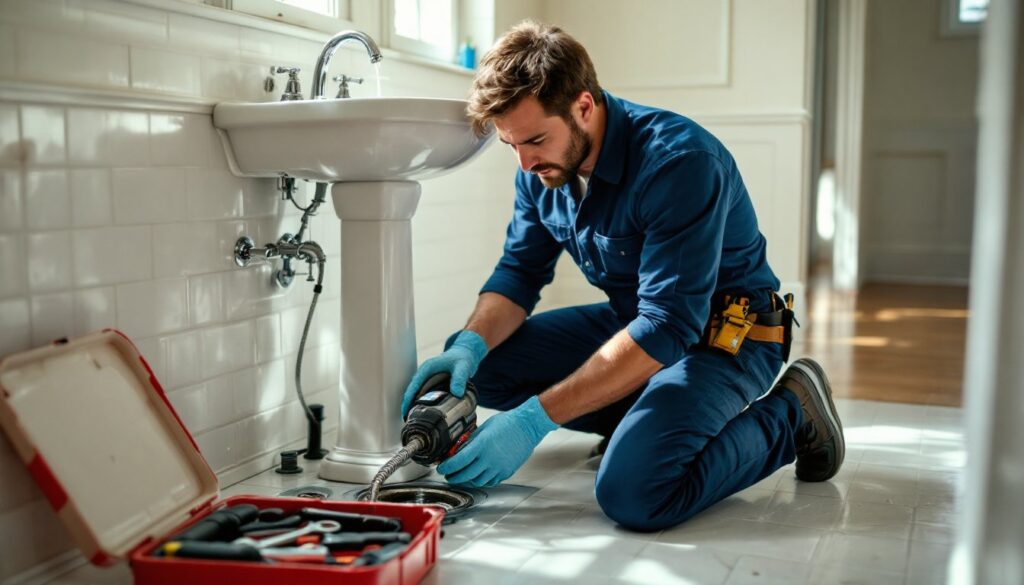
Step 1: Prepare the area. Clear items from under the sink or around the drain. Place towels to catch water and debris. Remove the drain stopper or strainer, most pop out by twisting or lifting. If snaking a sink, position a bucket under the P-trap in case you need to remove it.
Step 2: Feed the cable. Insert the snake’s tip into the drain opening. Push gently while rotating the handle clockwise (for manual snakes) or activating the motor (for electric models). Avoid forcing the cable, resistance usually means you’ve hit a bend, not the clog. Rotate slowly to navigate corners.
Step 3: Locate the clog. You’ll feel a change in resistance when the tip reaches the blockage. It may feel solid (grease or soap buildup) or spongy (hair mass). Once contact is made, continue rotating and pushing to break through or hook the clog. For manual snakes, maintain steady cranking pressure.
Step 4: Break up or retrieve the clog. Alternate between pushing and pulling while rotating. If using an electric snake, pulse the trigger rather than running continuously, this prevents the cable from binding. Some common drain blockages require multiple passes to fully clear.
Step 5: Withdraw the cable. Slowly pull the snake back while continuing to rotate. If you’ve snagged the clog, it will come out with the cable. Expect wet hair, soap scum, and other unpleasant debris. Wipe the cable clean with a rag as you retract it, this prevents mess and lets you inspect what you’ve removed.
Step 6: Test the drain. Run hot water for 2 to 3 minutes to flush residual debris. If water drains quickly and smoothly, you’ve cleared the clog. If it’s still slow, repeat the process or consider that the blockage may be farther down the line.
Step 7: Clean and store the snake. Rinse the cable thoroughly, wipe it dry, and apply a light coat of oil to prevent rust. Coil it neatly in the drum or storage case.
Safety notes: Wear gloves, drain gunk harbors bacteria. Use goggles if snaking overhead drains (like a bathtub from the overflow). Never force a kinked cable: retract and straighten it to avoid breakage. For electric snakes, keep hands clear of the rotating cable and use the foot pedal if available.
Common Mistakes to Avoid When Snaking Your Drain
Even experienced DIYers make these errors, which can worsen clogs or damage pipes.
Skipping the P-trap removal. If you can’t get the snake past the trap, remove it. Use adjustable pliers to loosen the slip nuts on both ends of the P-trap, then pull it free. Dump the contents into a bucket, inspect for blockages, and snake the drain line directly. Reinstall with new rubber washers if the old ones are cracked.
Over-tightening or forcing the cable. A kinked snake won’t advance and can snap inside the pipe. If you feel hard resistance, retract slightly, rotate, and try again at a different angle. When selecting and operating a drain snake, patience prevents most tool failures.
Using the wrong snake diameter. A 1/4-inch cable fits 1-1/4 to 1-1/2 inch drain pipes (standard for sinks). A 3/8-inch or 1/2-inch cable suits 2-inch or larger pipes (tubs, floor drains). Oversized cables can scratch or crack older cast iron or thin-walled PVC.
Ignoring the clog type. Snakes can’t dissolve grease or cut through tree roots. If the clog repeatedly returns after snaking, the problem may be grease buildup on pipe walls (needs enzymatic cleaner or hydro-jetting) or root intrusion (requires professional rooter service).
Scratching fixtures. Metal cable tips can gouge porcelain sinks, tubs, and toilets. Use a toilet auger for commodes: for other fixtures, feed the cable carefully and avoid grinding the tip against surfaces.
Neglecting PPE. Drain water contains bacteria, mold, and chemical residues. Gloves and goggles aren’t optional, they’re basic job-site safety.
When to Snake Your Drain vs. When to Call a Plumber
A drain snake handles routine clogs, but some situations exceed DIY scope.
Snake the drain if:
- Water drains slowly but doesn’t completely stop
- The clog is in a sink, tub, or shower within 25 feet of the drain opening
- You’ve tried a plunger and it didn’t work
- The blockage is likely hair, soap, or food particles
- Only one fixture is affected
Call a plumber if:
- Multiple drains back up simultaneously. This indicates a main sewer line clog or septic system issue, often caused by tree roots, collapsed pipes, or municipal sewer problems.
- Water or sewage backs up into other fixtures. For example, flushing the toilet causes the tub to gurgle. This signals a venting issue or shared drain blockage.
- The clog is beyond 25 feet. Main line clogs require a motorized sewer auger (50 to 100 feet) and expertise to avoid damaging pipes.
- You suspect a foreign object. Toys, jewelry, or hard items may require camera inspection and professional retrieval.
- Repeated clogs in the same location. Chronic blockages often stem from pipe sag, improper slope, or deteriorating lines. A plumber can camera-inspect the line and recommend repairs.
- You have old or fragile pipes. Cast iron, Orangeburg, or clay sewer lines can crack under aggressive snaking. Hire a pro with a camera to assess condition first.
Cost context: Professional drain cleaning runs $150 to $350 for a standard service call in most metro areas, depending on clog severity and access. Main sewer line work (hydro-jetting, camera inspection) can reach $400 to $1,000+. Knowing when to DIY versus when to hire protects both your wallet and your plumbing.
For homeowners comfortable with basic repairs, similar to those tackled on sites like The Handyman’s Daughter, a drain snake is a foundational skill. Master it once, and you’ll save hundreds over the years.