Table of Contents
ToggleTallahassee’s humid subtropical climate brings heavy rains, tropical storms, and an abundance of oak, pine, and live oak trees, all of which spell trouble for your gutters. Clogged gutters don’t just overflow: they invite foundation damage, roof rot, and mosquito breeding grounds. In a city where a single summer storm can dump inches of rain in under an hour, functional gutters aren’t optional. This guide walks homeowners through the when, why, and how of gutter cleaning Tallahassee FL, with practical steps for tackling the job safely and effectively.
Key Takeaways
- Tallahassee’s humid subtropical climate and heavy tree cover make gutter cleaning essential at least twice annually—spring and fall—with quarterly cleanings recommended for homes with mature oaks, pines, or magnolias.
- Clogged gutters in Tallahassee cause foundation damage, roof rot, mosquito breeding grounds, and sagging systems, making regular gutter cleaning a structural necessity rather than optional maintenance.
- DIY gutter cleaning requires proper safety gear (gloves, glasses, dust mask) and a sturdy extension ladder with a 4:1 positioning ratio; always work with a partner to prevent falls and injuries.
- When performing gutter cleaning, start at the downspout and work away to prevent clogs, then flush gutters, clear downspouts with a plumber’s snake if needed, and inspect for loose hangers, rust, and fascia damage.
- Install quality micro-mesh gutter guards to reduce cleaning frequency, trim tree branches 10 feet from the roofline, and ensure downspout extensions direct water at least 6 feet from your foundation to prevent settlement issues.
Why Gutter Cleaning Matters in Tallahassee’s Climate
Tallahassee sits in USDA Hardiness Zone 8b, with average annual rainfall around 60 inches, well above the national average. That moisture, combined with mature tree canopies dropping leaves, pine needles, acorns, and Spanish moss, creates the perfect recipe for clogged gutters.
When debris blocks downspouts, rainwater backs up and pools along the roofline. Over time, this leads to fascia rot, roof sheathing decay, and soffit damage. Water overflowing the gutter edge can saturate the soil around your foundation, causing settlement cracks or basement seepage, especially in Tallahassee’s clay-heavy soils that expand and contract with moisture.
Standing water in gutters also attracts mosquitoes, which breed aggressively in North Florida’s warm, humid environment. A single clogged gutter section can become a mosquito nursery within days of a rainstorm.
Beyond structural and pest issues, neglected gutters add weight. Wet debris can weigh several pounds per linear foot, straining gutter hangers and pulling the system away from the fascia. If you’ve noticed sagging or separated gutters, debris overload is often the culprit.
For homeowners comparing options, contractor matching services can provide cost estimates and qualified professionals in the Tallahassee area if the DIY route feels overwhelming.
When to Clean Your Gutters in Tallahassee
Tallahassee’s seasonal patterns dictate a specific cleaning schedule. The minimum recommended frequency is twice per year, but local conditions often require more.
Spring (March–May): After oak pollen drops and spring storms pass, gutters fill with pollen residue, seedpods, and early leaf debris. Clean gutters in late April or early May to prepare for summer thunderstorm season.
Fall (October–November): This is the heaviest debris season. Oak, pecan, and sweetgum trees shed leaves, and pine needles accumulate rapidly. Schedule a thorough cleaning in late October or early November before winter rains arrive.
Hurricane Season (June–November): If a tropical storm or hurricane passes through, inspect and clean gutters immediately afterward. High winds deposit extra debris, and clogged gutters can’t handle the intense rainfall that follows these systems.
Homes with Heavy Tree Cover: If your property has mature oaks, pines, or magnolias within 20 feet of the roofline, plan on quarterly cleanings. Pine needles are especially problematic, they mat together and block downspouts even when the gutter trough looks clear.
Watch for warning signs between scheduled cleanings: water overflowing during rain, sagging gutter sections, or visible plant growth in the gutter channel. These indicate it’s time to clean regardless of the calendar.
DIY Gutter Cleaning: Tools and Safety Tips
Gutter cleaning is physically manageable for most homeowners, but it requires proper equipment and safety precautions. Falls from ladders are a leading cause of DIY injuries, so take this seriously.
Safety Gear (non-negotiable):
- Work gloves: Rubber-coated or leather to protect against sharp debris, metal edges, and wasp nests
- Safety glasses: Debris and dirty water will fall on you
- Non-slip shoes: Rubber-soled boots with ankle support
- Dust mask or N95 respirator: Decomposed organic matter harbors mold and bacteria
Ladder Safety:
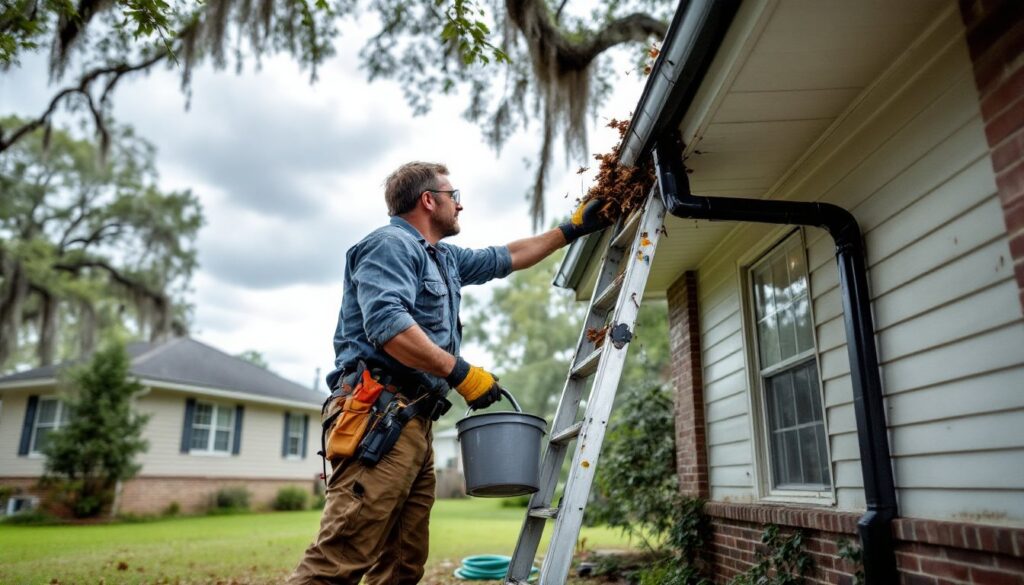
Use a sturdy extension ladder rated for your weight plus 20-30 pounds of tools. Position it on level ground and maintain a 4:1 ratio (for every 4 feet of height, the base should be 1 foot from the wall). Never lean an extension ladder directly against the gutter, use ladder standoffs or stabilizers to distribute weight against the wall, not the gutter edge.
For single-story homes, a step ladder works on flat sections, but you’ll still need an extension ladder for two-story areas. Never stand on the top two rungs.
Work with a partner whenever possible. They can stabilize the ladder, hand you tools, and call for help if something goes wrong.
Essential Equipment for the Job
Core Tools:
- Gutter scoop or garden trowel: Plastic scoops won’t scratch gutter liners: metal trowels work faster but risk damaging aluminum gutters
- 5-gallon bucket with S-hook: Hang it from the ladder to collect debris instead of dropping it on landscaping
- Garden hose with spray nozzle: For flushing gutters and testing downspouts
- Plumber’s snake or pressure washer attachment: To clear stubborn downspout clogs
Optional but Helpful:
- Gutter cleaning wand: Attaches to a hose for ground-level flushing (works only on light debris)
- Wet/dry shop vac with gutter attachment: Useful for two-story homes: reduces ladder time
- Telescoping pole with gutter brush: Alternative for maintenance cleanings between deep cleans
Avoid high-pressure washers directly in gutters, they can separate seams and damage gutter pitch. Use moderate pressure and work from the high end toward downspouts.
Step-by-Step Gutter Cleaning Process
Start at a downspout and work away from it. This prevents pushing debris into the downspout opening, which causes clogs.
1. Remove Large Debris
Use your gutter scoop or gloved hands to pull out leaves, twigs, and matted organic material. Drop it into your bucket, don’t toss it on the ground or roof. Work in 3–4 foot sections before moving the ladder.
Check for wasp nests or hornet activity before reaching into any section. Tallahassee’s warm climate supports year-round wasp populations. If you find an active nest, treat it with wasp spray the night before cleaning (when insects are dormant) or hire a pest control service.
2. Flush Gutters with Water
Once large debris is removed, use a garden hose to flush the gutter channel from the far end toward the downspout. Watch for pooling water, which indicates improper pitch. Gutters should slope 1/4 inch per 10 feet toward downspouts.
If water doesn’t drain, you likely have a downspout clog or a pitch problem. Don’t ignore standing water, it weighs down the system and breeds mosquitoes.
3. Clear Downspouts
If water backs up at the downspout opening, there’s a clog. Try flushing from the top with full hose pressure. If that fails, disconnect the downspout elbow at the bottom and use a plumber’s snake or straightened wire coat hanger to push the clog out.
For stubborn clogs, tap the downspout with a rubber mallet while flushing, the vibration often loosens compacted debris. Reassemble and test flow.
4. Inspect and Repair
While up there, check for:
- Loose or missing gutter hangers: Should be spaced every 24 inches: tighten or replace as needed
- Separated seams or end caps: Seal with gutter sealant (not silicone caulk, which doesn’t flex)
- Rust spots or holes: Patch small holes with gutter repair tape or replace the section if damage is extensive
- Fascia damage: Soft or rotting wood behind the gutter requires immediate attention to prevent structural issues
Many homeowners find cost guides and maintenance schedules helpful for budgeting repairs before small issues become expensive problems.
5. Test the System
Run the hose at full pressure for several minutes and observe the entire gutter run. Water should flow smoothly to downspouts with no overflow or drips at seams. Check that downspout extensions direct water at least 6 feet away from the foundation.
Common Gutter Problems Tallahassee Homeowners Face
Sagging Gutters
Caused by debris weight, failed hangers, or improper installation. If the gutter pulls away from the fascia, replace the hangers with hidden hangers or fascia brackets, both offer better support than spike-and-ferrule systems. Make sure the fascia board itself isn’t rotted: it won’t hold fasteners if the wood is compromised.
Pine Needle Accumulation
Pine needles slip through many gutter guards and mat into dense clogs. Use a gutter brush insert or micro-mesh guard specifically rated for pine needles. Standard perforated guards don’t work.
Downspout Clogs at Elbows
The angled elbows where downspouts meet the gutter outlet are prime clog points. Install downspout screens or leaf strainers at the outlet to catch debris before it enters the downspout.
Algae and Mold Growth
Tallahassee’s humidity encourages algae and mold in gutters that don’t dry out completely. After cleaning, spray gutters with a 30% vinegar solution or a diluted bleach mix (1 part bleach to 3 parts water) to kill spores. Let it sit for 10 minutes, then rinse thoroughly.
Gutter Overflow During Heavy Rains
If gutters overflow even when clean, you may have undersized gutters for your roof area. Standard 5-inch K-style gutters handle most residential roofs, but larger or steeper roofs may require 6-inch gutters or additional downspouts. Consult a gutter contractor if overflow persists after cleaning and pitch adjustments.
Gutter Maintenance Between Cleanings
Regular maintenance extends the time between full cleanings and prevents emergency clogs.
Install Gutter Guards
No gutter guard eliminates cleaning entirely, but quality guards reduce frequency. Micro-mesh guards work best in Tallahassee’s tree-heavy environment, they block leaves and pine needles while allowing water flow. Avoid cheap plastic snap-on guards: they clog quickly and can trap debris underneath.
Expect to pay $7–$12 per linear foot installed for professional-grade guards, or DIY versions run $2–$5 per foot. Factor in your roof pitch and tree density when choosing a system.
Trim Overhanging Branches
Keep tree branches trimmed back at least 10 feet from the roofline. This reduces leaf drop, limits critter access to your roof, and decreases debris accumulation. For large oaks or pines, hire a certified arborist, improper trimming can harm tree health or create hazards.
Monthly Visual Inspections
From the ground, use binoculars to check for sagging, visible debris, or plant growth. After heavy storms, walk your property and look for standing water or overflow stains on siding.
Flush Gutters Seasonally
Between deep cleanings, use a garden hose to flush gutters from ground level if you have a gutter cleaning wand attachment. This won’t replace hands-on cleaning but helps manage light buildup.
Check Downspout Extensions
Ensure extensions stay connected and direct water away from the foundation. In Tallahassee’s clay soils, water pooling near the foundation can cause significant settling issues. Extend downspouts farther during rainy season if needed.
For homeowners looking for detailed seasonal maintenance routines, home maintenance checklists offer month-by-month guidance tailored to different climates.
Monitor for Pests
Clogged gutters attract mosquitoes, termites, and carpenter ants. If you notice increased insect activity near your roofline, inspect gutters immediately. Tallahassee’s termite pressure is high, and damp wood from gutter overflow creates ideal conditions for infestation.