Table of Contents
ToggleA dishwasher’s cleaning cycle is the backbone of every load you run, yet most homeowners don’t understand what’s actually happening inside that sealed box. Knowing how your machine operates, which cycle to select, and how to troubleshoot common issues can mean the difference between glasses with water spots and dishes that look hand-polished. This guide breaks down the mechanics, cycle types, and practical tips to help you get professional results from your dishwasher every single time.
Key Takeaways
- A dishwasher cleaning cycle consists of multiple phases—pre-wash, main wash, rinses, and drying—each designed to remove food, sanitize surfaces, and deliver spot-free results.
- Selecting the right cycle type for your load is critical: use Normal Wash for everyday dishes, Heavy-Duty for baked-on food, and Quick Wash only for lightly soiled items needing urgent cleaning.
- Optimize your dishwasher cleaning cycle by loading dishes correctly (facing spray arms), scraping instead of pre-rinsing, maintaining proper water temperature (120–140°F), and keeping rinse aid topped off.
- Common issues like water spots, wet dishes, and poor cleaning are usually caused by hard water, clogged filters, blocked spray arms, or insufficient rinse aid—all fixable with routine maintenance.
- Modern dishwashers use soil sensors to adjust water and heat based on load dirtiness, making them more efficient than older fixed-timer models when properly maintained and loaded.
What Is a Dishwasher Cleaning Cycle?
A dishwasher cleaning cycle is the programmed sequence of water fills, washes, rinses, and drains that cleans your dishes. It’s not just one continuous spray, most cycles include multiple phases, each with a specific job.
The typical sequence includes a pre-wash (cold water rinse to loosen food), a main wash (hot water with detergent), one or more rinse phases (to remove detergent and debris), and a final rinse with a heated dry. Duration varies widely: a light cycle might run 90 minutes, while a heavy-duty cycle can exceed 2.5 hours.
Modern dishwashers use sensors to adjust cycle length and water temperature based on soil level and load size. Older mechanical models rely on fixed timers. Either way, the goal is the same: remove food particles, sanitize surfaces, and leave dishes dry and ready to put away.
Understanding this sequence helps you troubleshoot. If dishes come out dirty, the issue is often in the main wash phase, clogged spray arms, weak detergent, or insufficient water temperature. If they’re spotty, the final rinse or rinse aid dispenser may be the culprit.
How the Dishwasher Cleaning Cycle Works
Inside the machine, the cleaning cycle is a choreographed loop of water, heat, and mechanical action. Here’s what happens step by step.
Water fill: The dishwasher draws water from your home’s hot water line (ideally 120–140°F). Some models have internal heaters to boost temperature if needed. Most machines use only 3–4 gallons per cycle, far less than handwashing.
Pre-wash: Cold or warm water sprays across dishes to soften and loosen stuck-on food. This phase doesn’t use detergent. It’s a quick rinse that sets up the main wash for success.
Main wash: The detergent dispenser opens, releasing powder, gel, or pod into the wash water. The pump forces water through spinning spray arms, usually one on the bottom and one on the top rack. High water pressure, combined with detergent chemistry and heat, breaks down grease and starches.
Rinse phases: After the main wash drains, the machine refills with clean water and sprays again, sometimes two or three times. The final rinse often includes a rinse aid, which reduces surface tension so water sheets off instead of beading up. This is critical for spot-free glassware.
Drying: Most dishwashers use heated drying (an element warms the air inside) or condensation drying (hot rinse water evaporates on cooler stainless walls). Some newer models use fan-assisted drying.
The entire process is managed by a control board or timer, which sequences the fill valve, pump, heating element, and detergent dispenser. If any component fails, like a clogged filter or faulty heating element, the whole cycle suffers.
Different Types of Dishwasher Cleaning Cycles Explained
Most dishwashers offer four to six cycle options. The names vary by brand, but the functions are consistent. Choosing the right cycle for your load saves time, water, and energy, and it protects delicate items from damage.
Normal Wash Cycle
This is the default for everyday dishes: plates, bowls, utensils, and lightly soiled cookware. The normal cycle typically runs 2–2.5 hours and uses water heated to 120–130°F. It balances cleaning power with energy efficiency.
Use it for dishes that have been rinsed or scraped (not pre-washed, modern detergents need some food residue to activate enzymes). It’s the workhorse cycle and the one you’ll use 80% of the time.
Some models label this “auto” or “sensor wash,” meaning the machine adjusts water and time based on turbidity sensors that measure how dirty the water is. It’s a smart option if you’re mixing lightly and moderately soiled items.
Heavy-Duty and Intensive Cycles
For pots, pans, casserole dishes, and anything with baked-on or dried food, the heavy-duty cycle is your go-to. It runs hotter (up to 140–150°F in the main wash) and longer, often 2.5–3 hours.
This cycle uses more water and energy, but it’s worth it for tough jobs. If you’ve got sheet pans with caramelized sugar or a Dutch oven with stuck-on chili, don’t waste a normal cycle. The extra heat and extended wash time make a real difference.
Some machines also offer a sanitize cycle, which meets NSF/ANSI Standard 184 by reaching 150°F or higher during the final rinse. This is useful for cutting boards, baby bottles, or anything you want truly bacteria-free. Note that sanitize cycles can take over 3 hours and aren’t necessary for routine loads.
Quick wash (or express) cycles run 30–60 minutes and are meant for lightly soiled dishes you need in a hurry. They use less heat and fewer rinses, so they’re not ideal for greasy or heavily soiled items. Think of it as a top-off cycle, not a replacement for a full wash.
Delicate or glassware cycles use lower temperatures and gentler spray pressure to protect wine glasses, crystal, and fine china. If you’re washing anything with gold trim or hand-painted details, this is the cycle to use.
How to Optimize Your Dishwasher Cleaning Cycle for Best Results
Even the best dishwasher won’t deliver clean dishes if you skip the setup. Here’s how to get the most out of every cycle.
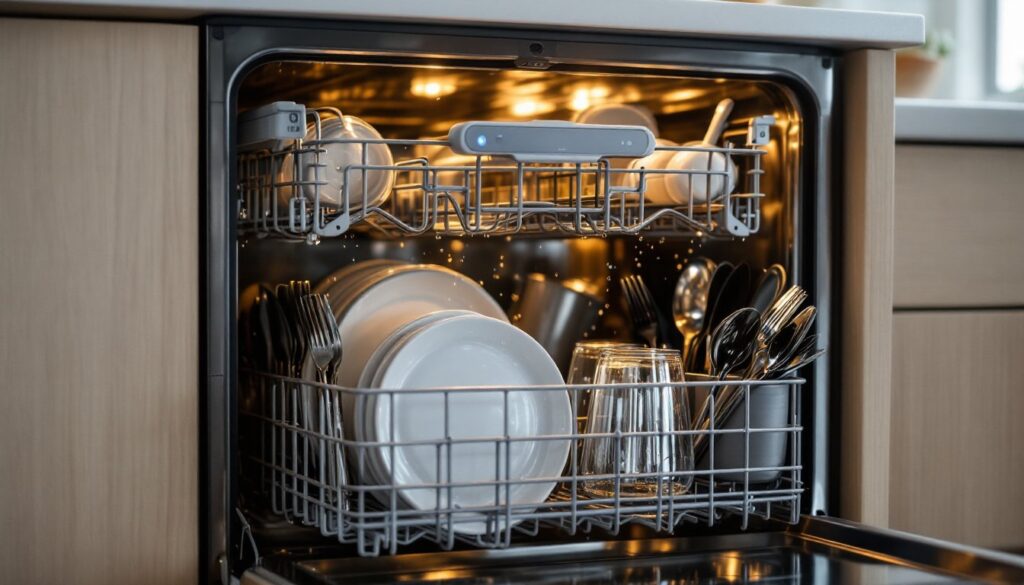
Load dishes correctly. Face dirty surfaces toward the spray arms, plates and bowls angled down, pots and pans facing the center. Don’t nest items or block the spray arms’ rotation. Utensils go handles-down (except knives, for safety). Overloading is the single biggest reason for poor performance.
Scrape, don’t rinse. Modern detergents contain enzymes that need food particles to work. A quick scrape with a spatula is enough. Pre-rinsing wastes water and can actually leave dishes dirtier because the detergent has nothing to latch onto.
Use the right detergent. Powder, gel, and pods all work, but pods are pre-measured and convenient. Skip the bargain brands, cheap detergent doesn’t dissolve fully and leaves residue. For hard water, look for formulas with built-in water softeners.
Check water temperature. Run the kitchen faucet until the water is hot before starting the dishwasher. If your water heater is set below 120°F, the dishwasher’s internal heater has to work overtime, extending cycle time and using more energy. Many kitchen appliance efficiency issues stem from improper water heater settings.
Keep rinse aid topped off. Even if your detergent claims to include rinse aid, the dedicated dispenser does a better job. It prevents water spots and helps dishes dry faster. Refill it monthly.
Clean the filter regularly. Most dishwashers have a removable filter at the bottom of the tub. Pull it out every month, rinse it under hot water, and scrub away any trapped food with a soft brush. A clogged filter reduces spray pressure and recirculates dirty water. For a deeper clean, running a self-cleaning cycle with vinegar every few months helps remove mineral buildup.
Don’t block the detergent dispenser. Large platters or baking sheets placed in the lower rack can prevent the dispenser door from opening. If the detergent doesn’t release, you’re just running a hot water rinse.
Common Problems That Affect Cleaning Cycle Performance
When dishes come out dirty, cloudy, or wet, the issue is usually one of a few common culprits. Here’s how to diagnose and fix them.
White film or spots: This is almost always hard water. Mineral deposits build up on glassware and the interior of the machine. Use a rinse aid, and consider adding a water softener or using a detergent formulated for hard water. For existing buildup, run an empty cycle with a cup of white vinegar in the top rack.
Dishes still wet after drying: Check your rinse aid level first. If that’s full, the heating element or fan may not be working. Some dishwashers (especially European models) use condensation drying, which leaves plastics damp, that’s normal. Open the door slightly after the cycle ends to let steam escape.
Food left on dishes: Clean the spray arms. Pull them off (most twist or snap off) and rinse out any clogs in the spray holes. Use a toothpick or wire to clear stubborn debris. Also check the filter and make sure you’re not overloading the racks. If the problem persists, water pressure may be low, or the pump could be failing.
Long cycle times: Modern dishwashers use soil sensors and can run longer if they detect dirty water. This is normal. If cycles suddenly become much longer, the heating element may be struggling to reach temperature, or the inlet valve may be restricting flow.
Bad odors: This usually means trapped food in the filter, drain, or door gasket. Remove and clean the filter, wipe down the gasket with a damp cloth, and run a cleaning cycle. Leaving the door ajar between uses helps prevent mildew. Comprehensive appliance maintenance guides often recommend monthly deep cleans to avoid odor buildup.
Detergent not dissolving: If you find a full pod or clump of powder at the end of a cycle, the water isn’t hot enough, or the dispenser is blocked. Verify your water heater is set correctly and that nothing is blocking the dispenser door.
Most performance issues are fixable with routine maintenance. Replace worn gaskets, clean spray arms and filters monthly, and descale the interior every few months if you have hard water. If the control board, pump, or heating element fails, that’s when you call a tech, but those failures are rare if you keep up with basic upkeep.
Understanding your dishwasher’s cleaning cycle turns a mysterious appliance into a reliable tool. Choose the right cycle, load strategically, and maintain the machine, and you’ll get restaurant-quality results every time you run a load.